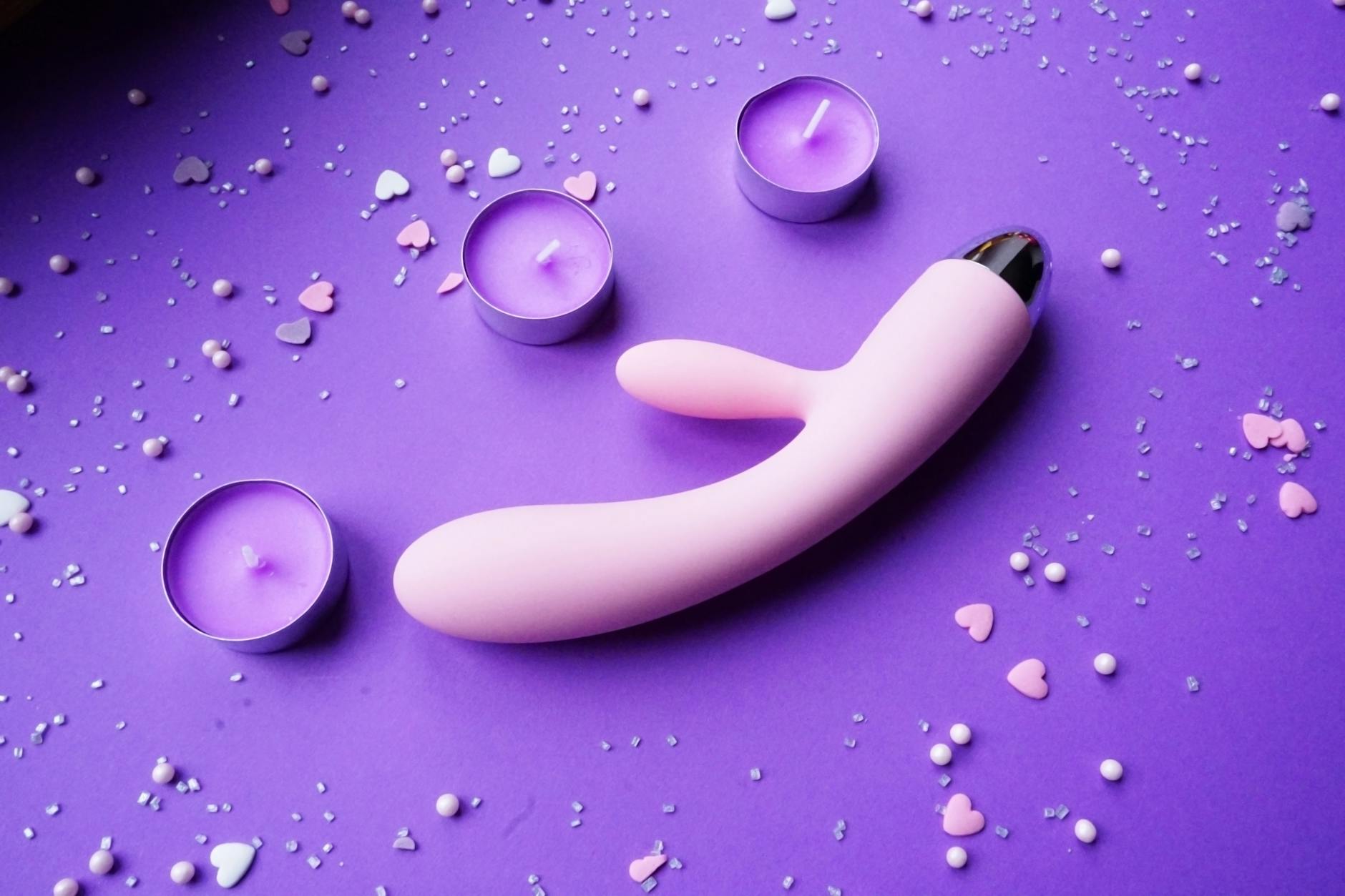
How Lemon Vibrators Help With Numbness and Reduced Sensation After Antidepressants
The sexual side effects of SSRIs and SNRIs are real, persistent, and fixable. Here's what's happening in your body and why lemon clitoral vibrators often work where nothing else does.
Let's be real: your antidepressant is working for your brain, but it might be quietly working against your pleasure. SSRIs and SNRIs are lifesaving medications for millions of people, but somewhere between 40 and 60% of people taking them report some flavor of sexual dysfunction. Numbness, delayed orgasm, reduced arousal, or that weird flatness where sensation used to be.
The infuriating part? Most doctors minimize it, and most sex advice assumes you have baseline sensation to work with. You don't. You're working with less.
Here's the thing though: you don't have to choose between your mental health and your pleasure. There are specific ways to work with your body's chemistry, and lemon vibrators happen to be one of the most effective tools I've seen clients use to restore sensation without stopping their medication.
SSRIs work by increasing serotonin availability in your brain. That's the mechanism that helps with depression and anxiety. But serotonin also regulates other pathways. One of those is the arousal pathway. When serotonin stays elevated in certain brain regions, it can suppress the signals that create sexual excitement and physical responsiveness.
It's not psychological. It's not "in your head" in the way that phrase usually means. Your nerve endings are still there. Your clitoris is still there. Your capacity for orgasm is still there. But the signal traveling from your body to your brain has gotten quieter.
Think of it like someone turned down the volume on pleasure's radio station. The broadcast is still happening. You just need a more powerful receiver.
Most vibrators use simple vibration to stimulate nerve endings. If your nerves are already muffled by antidepressants, you're asking them to respond to a signal they're struggling to hear anyway.
Lemon clitoral vibrators use suction technology instead. This creates a gentle, rhythmic pressure that works with your body's existing arousal response rather than against it. The sensation is deeper and broader than vibration alone.
Here's the clinical part made simple: suction creates a pressure gradient that stimulates not just surface nerves but the entire clitoral network. When topical sensation is dulled by medication, this deeper stimulation often bypasses the numbed pathways and reaches the nerves that are still responsive.
In plainer terms: a lemon vibrator can often wake up sensation that vibration alone can't touch.
When sensation is already reduced, the instinct is to crank intensity. More power must equal more feeling, right? It doesn't work that way with antidepressant-related numbness.
Start with your lemon vibrator on pattern 1 or 2. Spend 10-15 minutes exploring, not racing toward orgasm. You're not trying to achieve something yet. You're trying to remember what sensation feels like.
Most of my clients report that they can feel something at low intensity even when high intensity feels like nothing. That's not laziness on your part. That's your nervous system being selective about what signals it can process right now.
Add water-based lubricant. Antidepressants can also affect lubrication slightly, and even when they don't, lube makes the suction sensation feel more natural and less clinical. It's worth doing even if lubrication isn't technically the problem.
If you take your antidepressant every morning, your medication levels peak at different times depending on the specific drug. Some people find that arousal is slightly less numb in the afternoon or evening, when their peak levels have settled into a more moderate zone.
Others find the opposite. The only way to know is to experiment.
Try using your lemon vibrator at different times of day for a week each. Track what you notice. Better sensation in the morning? Evening? Doesn't matter. What matters is you're working with your biology instead of against it.
If you find one window where sensation is better, that's your window. Use it. That's not lazy or dependent. That's strategic.
Antidepressants flatten sensation both physically and psychologically. You might find that arousal feels like work because your brain isn't building anticipation the way it used to.
This is where partnered touch, fantasy, or whatever used to build arousal for you becomes even more important. Your lemon vibrator is the tool, but it's not the whole story.
If you have a partner, communication is key. Not "my medication is ruining this" but "my body's responding differently right now, and here's what's actually helping." That shifts the frame from problem to solution.
If you're solo, give yourself permission to use external help: erotica, audio, whatever used to work before medication. You're not broken. You're working with reduced sensory input, so you're bringing in more sources of stimulation. That's adaptation, not failure.
Some people's bodies adjust to antidepressants over time, and sensation gradually returns. Some don't. Either is normal.
If you're in the adjustment camp, you might notice that after three or six months, you need less intense stimulation. That's a good sign. You might also notice that partnered sex becomes easier, or that orgasm takes slightly less time.
If sensation doesn't improve with time, that's not a sign your medication isn't working. It's just a sign that this particular side effect is persistent for you. That doesn't mean you're stuck. Tools like lemon clitoral vibrators remain effective whether your numbness improves or not.
Your prescriber needs to know about this side effect. Not because they'll tell you to stop your medication (you shouldn't), but because they might have options.
Some antidepressants have lower sexual side effect profiles than others. Some doctors will suggest taking a dose an hour after sex instead of right before. Some will prescribe a small dose of buspirone or bupropion alongside your SSRI to counteract the sexual dampening.
These are real options, and you deserve to know they exist. The conversation might feel awkward, but "my sexual sensation has reduced since starting this medication and I'd like to know if there are adjustments we could try" is a straightforward clinical question.
If your doctor dismisses it or says "just live with it," consider a second opinion. Sexual function matters. Mental health matters more, but they're not in competition.
If numbness is your current reality, here's what actually works:
Three times a week, dedicate 20-30 minutes. Not because you have to be productive about pleasure, but because consistency helps your nervous system recognize and respond to stimulation over time. Your body learns.
Use your lemon vibrator on low intensity for the first 10-15 minutes. Notice what you feel. Adjust position. Try different patterns. You're not chasing an orgasm. You're gathering data.
Then, if you want, increase intensity. Some people get there. Some don't. Both are fine.
Stop if sensation flatlines completely. Sometimes your nervous system needs a break. That's not failure. That's feedback.
Over weeks, you'll likely notice sensation creeping back. Not all the way, maybe. But enough to matter.
If after four to six weeks of consistent use, lemon vibrators aren't helping at all, there are other conversations to have with your doctor.
Medication adjustments, adding a second medication to counteract the sexual side effect, or switching to an antidepressant with a lower sexual side effect profile. None of these are admissions of failure. They're solutions.
You don't have to choose between your mental health and your pleasure. That's a false choice, and you deserve better than settling for either/or.
Absolutely. Lemon vibrators are external devices. They don't interact with medication or your bloodstream. They're completely safe to use regardless of what medication you take. The only real consideration is making sure you're using it in a way that feels good to your body right now. Since sensation is already reduced, start with lower intensity and work from there.
That depends on whether your antidepressant side effects will improve over time (which varies person to person) or if they're persistent for you specifically. Some people notice increased sensation within two to three weeks of consistent use. Others find that sensation stays reduced but they adapt to using their lemon clitoral vibrator more effectively. There's no fixed timeline. What matters is consistency and patience with your body.
No. Not on your own, anyway. Your mental health comes first. If the side effect is severe, talk to your prescriber about alternatives. Some antidepressants have lower sexual side effect profiles, and some doctors can adjust dosing or add medications to help. But stopping your SSRI or SNRI without medical supervision can be dangerous. If you're struggling with this decision, your doctor is the only person who can help you weigh the risks and benefits appropriately.
For most people, yes. Suction-based stimulation like the lemon vibrator tends to work better for reduced sensation because it creates deeper, broader pressure rather than relying on surface nerve sensitivity. That said, every body is different. If you've tried a standard vibrator and it wasn't working, a lemon clitoral vibrator is worth trying. But if you want to experiment with other options, water-based lubrication and longer warm-up time will help with almost any device.
Completely. Partnered use is actually something lots of people find helpful because it adds a layer of connection and touch on top of the vibration. The key is communication. Tell your partner what you're feeling (or not feeling) and what intensity works. They're not trying to fix you. You're both exploring what works right now.
If you have a therapist, yes. If you only have a prescriber, tell them. Sexual function is part of wellbeing and quality of life. It's not frivolous. It's not shallow. It's a legitimate side effect that's worth discussing openly with your healthcare providers.
Your antidepressant is doing important work in your brain. And your pleasure matters too. These things aren't in conflict. With the right tools and a little patience with yourself, you can have both.