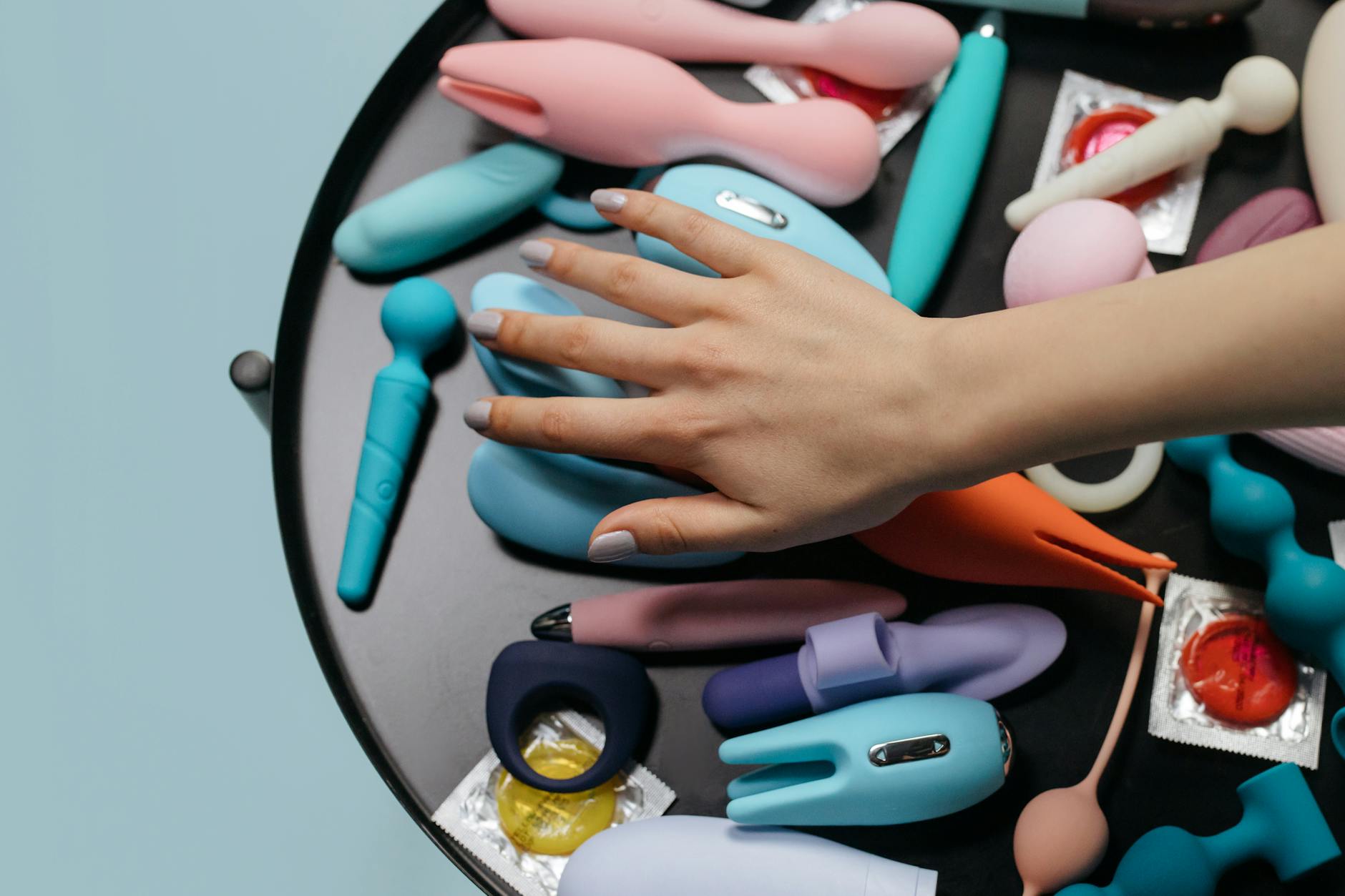
How Lemon Vibrators Help With Decreased Arousal During Midlife Transition
Arousal doesn't disappear in your 40s and beyond. It shifts. Here's what actually happens to desire, why sensation changes, and how lemon clitoral vibrators can help you reconnect.
Honestly, let's start here. Midlife arousal changes are not a personal failure. They're not a sign your body is broken or that your relationship has died. They're a predictable biological shift that affects most people at some point, and knowing that alone changes everything.
The tricky part is that nobody talks about it clearly. You get vague reassurances or alarming headlines, but not the actual mechanics of what's happening and what you can do about it. That's where this lands.
Your arousal response is controlled by a cocktail of hormones, neurotransmitters, and blood flow. In midlife, several things shift simultaneously.
Estrogen levels decline gradually (or drop sharply, depending on your body). Less estrogen means thinner vaginal tissue, which sounds minor until you realize that tissue sensitivity is linked to arousal feedback. Your brain needs that sensory input to keep the cycle going. Without it, arousal takes longer to initiate and feels less intense.
At the same time, dopamine production often decreases. Dopamine is the "seek and desire" neurotransmitter. It's what makes you want something before you have it. A dopamine dip explains why you might not think about sex as often, even if you enjoy it once you get going.
Blood flow to the pelvic region also becomes less responsive. Arousal depends on vasocongestion, basically blood pooling in the genitals to create swelling, lubrication, and that heightened sensation. If blood vessels are less reactive, that whole cascade takes longer to trigger.
None of this means arousal is impossible. It means the pathway has a slightly longer route.
Here's the part that surprises most people: decreased arousal in midlife often isn't about desire disappearing. It's about sensation flattening.
Imagine the difference between someone touching your arm with their fingertip versus with a firm hand. Same person, same arm, completely different sensation. Midlife tissue changes work similarly. The clitoris and surrounding tissue are thinner and less engorged with blood flow at rest. That means lighter touch registers as less intense.
This is why a device like the Lemon clitoral vibrator makes such a tangible difference. Unlike traditional vibrators, lemon suction vibrators use air-pulse technology to stimulate the clitoris through gentle suction rather than direct friction. That suction creates the vasocongestion your body isn't generating automatically, which rebuilds sensation intensity without requiring firmer touch.
Physiology is only part of the story. Midlife arousal also gets tangled with expectation and narrative.
Many people internalize the story that desire is supposed to decline with age. You've heard it enough times that your brain starts to believe it's inevitable. Then when it happens, you assume it's permanent. You stop initiating. You pull back. Your partner senses the shift and pulls back too. What started as a biological fluctuation becomes a relational pattern.
This is where I see the biggest opportunities for couples. Not in treating the body as broken, but in treating arousal as a skill that needs rebuilding during transition.
How to Use Lemon Vibrators With a Partner is often the first conversation I recommend. Not because you need a prop to have sex, but because introducing a tool explicitly signals something important to your brain: I'm not accepting this as permanent. I'm actively choosing pleasure.
Let me break down why lemon sexual toys work particularly well for midlife arousal changes.
The suction mechanism stimulates the clitoris through air pulses rather than vibration. This activates nerves differently than traditional vibrators, often creating a more intense sensation even at lower settings. For someone experiencing muted sensation, that intensity gap matters.
Suction technology also naturally encourages blood flow. As the suction builds, your body responds by increasing vasocongestion. You're not waiting for arousal to happen passively. You're actively priming the response.
The gradual intensity increase means you can start at a setting that feels right today and adjust as your body responds. Many people find that regular use of a lemon clitoral vibrator actually increases baseline sensitivity over time. Your nervous system gets recalibrated.
There's also the confidence piece. Using a lemon vibrator is explicitly an act of self-care. It signals to yourself that your pleasure still matters, even if the easy automatic response has shifted. That signal travels deeper than you'd expect.
Tool alone isn't enough. You need the conditions to support it.
Time and privacy matter more than you think. Arousal in midlife needs what I call "generous space." Not rushed, not anxious about being interrupted, not performing for anyone. Budget at least 20-30 minutes when you know you won't be disturbed.
Separate physical pleasure from partnered sex temporarily. When arousal feels difficult, combining it with pressure to perform for a partner compounds the anxiety. Start solo. Reconnect with your own sensation first. Then bring a partner back in once you've rebuilt that baseline.
Reduce friction in the rest of life first. Midlife arousal struggles almost always correlate with stress, sleep debt, and emotional disconnection. You can't supplement your way out of chronic exhaustion or resentment. Address the structural stuff first.
Use lube generously. With thinner tissue, lubrication isn't optional. Water-based works best if you're using silicone lemon toys. It removes friction that can feel uncomfortable rather than pleasurable.
If you're experiencing pain during arousal or penetration, don't self-treat. That's worth a conversation with a doctor. Genitourinary syndrome of menopause is common and highly treatable with topical therapies.
If desire has completely flattened and nothing helps after three months of consistent effort, that's also worth mentioning to your GP. Sometimes decreased arousal points to thyroid issues, depression, or medication side effects that need attention.
But if it's just sensation that feels muted or arousal that's slower to build, that's often exactly what lemon vibrators were designed for.
Here's what I tell most midlife clients: your arousal doesn't work like it did at 25. That's not a bug. It's an adjustment. And adjustments are workable.
You deserve to explore what feels good in this chapter, not chase what worked before. That's not settling. That's presence. And for many people, that presence combined with the right tool makes this phase of sexuality richer than earlier ones.
No. It's usually a combination of predictable biological shifts plus psychological narrative. Once you address both pieces, most people experience significant improvement within weeks to months. Using a tool like a lemon clitoral vibrator as part of that reset often accelerates the process.
That varies. Some people notice increased sensation within a few sessions. For others, it takes two to three weeks of consistent use before the nervous system recalibrates. The key is consistency and patience. Think of it as rebuilding a pathway rather than flipping a switch.
Both work. Some couples find that using a lemon clitoral vibrator together from the start creates connection and shared problem-solving. Others need solo time first to remove performance pressure. Talk about what feels safer, then try that first. You can always switch approaches.
Actually no. The opposite often happens. Regular use of lemon vibrators helps your nervous system remember what full arousal feels like. That sensory memory often transfers to partnered sex and solo arousal without the tool. It's retraining, not dependence.
That's a conversation worth having clearly. The script I usually suggest: "My body has changed, and I need a different kind of touch right now. This isn't about you or our relationship. It's about me figuring out how to feel good in this phase. I'd like your support." If they're willing, sometimes using it together takes the defensiveness out.
Other clitoral vibrators can help. But air-pulse technology (which lemon vibrators use) tends to outperform traditional vibration for rebuilding sensation during this transition. That's consistent enough in my practice that I usually recommend trying a lemon clitoral vibrator first before exploring other options.
Midlife arousal changes are real. Your body is not broken. What's changed is the pathway, not the destination. Lemon vibrators work because they rebuild sensation without requiring your body to do all the work alone. Combined with patience, permission, and communication, they often restore arousal faster than you'd expect.
Your pleasure matters in this phase just as much as it ever did. You just get to be smarter about supporting it.