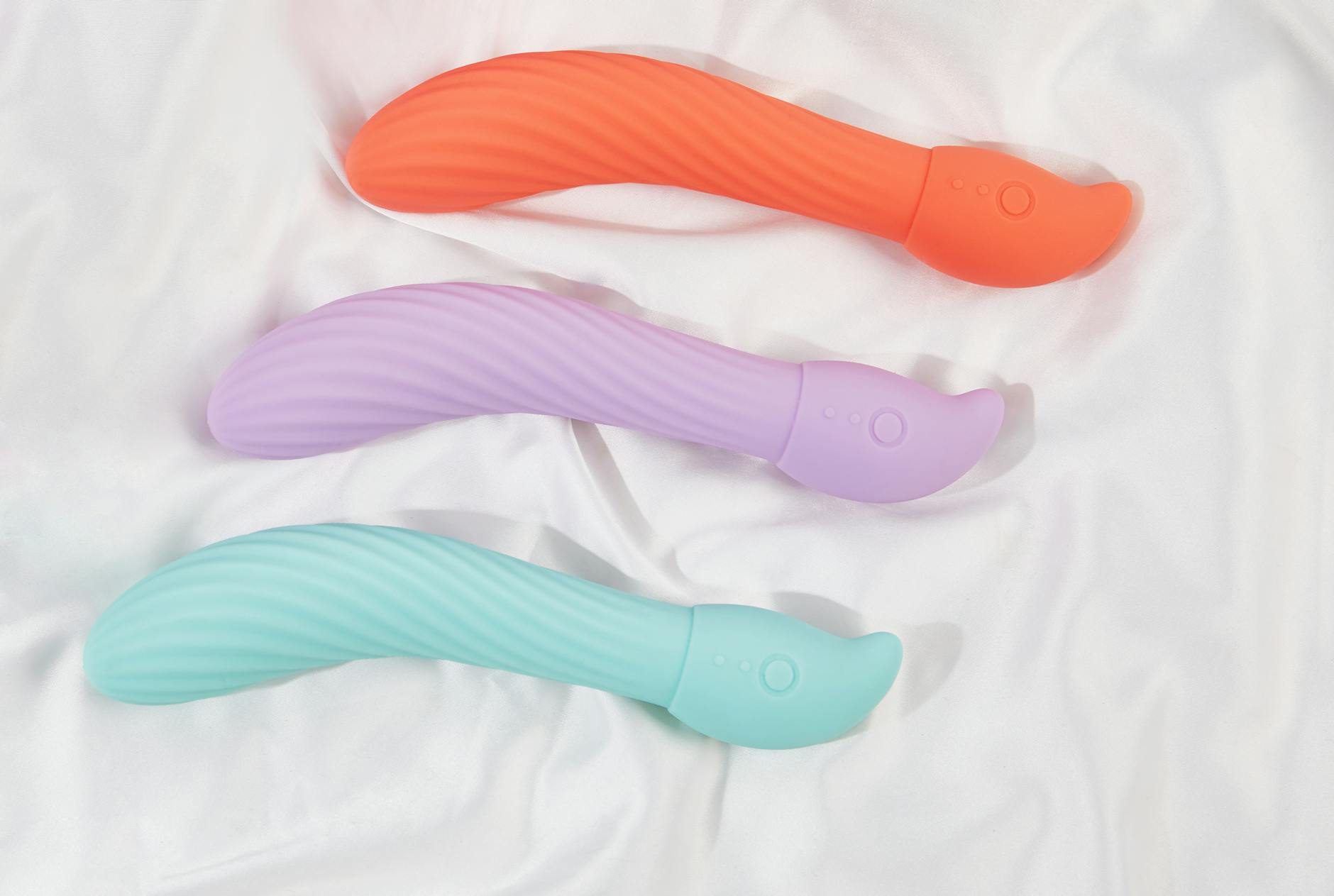
Honestly? The biggest barrier to using lemon vibrators with a partner isn't logistics. It's anxiety. You're worried it means something. That introducing a toy signals your partner isn't enough, or that you're being needy, or that the whole thing will feel clinical and weird instead of hot.
Here's what research shows: couples who use vibrators together report higher satisfaction, better communication, and more frequent orgasms overall. The vibrator isn't a replacement for your partner. It's an amplifier. It does one job: deliver consistent stimulation to the clitoris. Your partner does everything else. The combination is more pleasurable than either alone.
A lemon vibrator, specifically, is designed for this. Unlike wand vibrators, which require a lot of space and can feel dominating in partnered situations, clitoral vibrators like the Lemon are compact, hands-free (or close to it), and they work with your partner's movement instead of against it.
That said, there's a skill to it. You can't just hand your partner a vibrator and hope for the best. The conversation matters. The positioning matters. How you frame it matters.
Don't introduce the idea mid-sex. That's a setup for misunderstanding and defensiveness.
Instead, pick a time when you're both relaxed and clothed. Literally anywhere works: after dinner, on the couch, whenever. The script is simple: "I've been thinking about adding something to our sex life. I want to explore clitoral vibrators together. I think it could feel really good for me, and I'd love your help figuring out how."
Notice what's in that: you're owning the desire (I want), you're inviting collaboration (together, help), and you're specific about what you want (clitoral vibrators, not "something").
Your partner might have questions. Good. Common ones:
"Does that mean you're not satisfied?" No. It means you want to explore a new sensation together. Wanting more pleasure isn't a referendum on what already works.
"Will it hurt or feel weird?" Clitoral vibrators feel good. If they don't, you'll stop using it. No pressure.
"Am I supposed to use it or are you?" You both can. That's the fun part.
If your partner is hesitant, ask what the concern is. Listen. Don't push. Some people need time. That's okay. But most hesitation dissolves once they understand it's collaborative, not competitive.
This is where people get stuck, so let me walk you through the most practical setups.
You on top, you in control. You're straddling your partner. You hold the vibrator against your own clitoris or direct your partner's hand while they hold it. You control pressure and speed. Your partner is present and involved but not managing the toy. This works if you know exactly what you need and want to be in the driver's seat.
You on top, your partner holds it. Same position, but your partner holds the lemon vibrator while you guide their hand. This requires more communication ("higher," "softer," "right there") but it can feel less lonely and more collaborative. Many couples find this is the sweet spot.
Spooning or side-by-side. You're lying on your side, your partner behind you. They can use a vibrator on you while being inside you or just stimulating you externally. This position is intimate, requires less athleticism, and works particularly well if you're tired or dealing with any physical discomfort.
You lying back, partner between your legs. Classic position. Your partner can use the vibrator while also using their mouth, fingers, or penis. This is the most versatile because your partner has access to everything and can switch between sensations.
Starting position matters less than your ability to communicate mid-sex. "That's too intense," "Can you angle it differently," "That feels amazing, keep doing that." These aren't mood-killers. They're instructions for better sex.
Most lemon vibrators have multiple settings. Start low. Pattern 1 or 2. You're testing what feels good, not trying to reach orgasm in the first 30 seconds.
The vibrator doesn't necessarily go inside. It sits against the clitoris or the entire vulva. Some people like it directly on the clitoris. Others prefer it slightly offset so the sensation is intense but not overwhelming. Your partner can hold it steady, move it in small circles, or press it gently and let the vibration do the work.
If you're using it during penetration, the vibrator usually goes on the top side of your clitoris because that's where there's space. Your partner's body or the vibrator might make contact with your clitoris or your partner simultaneously. That's normal. It actually feels incredible.
It might feel weird the first time. That's not a sign it's wrong. You're adding a new element to something familiar. Your nervous system needs a second to adjust.
If the awkwardness lingers, troubleshoot:
Is the vibration too intense? Turn it down. Many people reach for the highest setting first. You almost certainly don't need it.
Is the communication breaking down? Pause, check in, adjust positioning. "I need you to angle it this way," not "You're doing it wrong."
Are you in your head about it? Absolutely normal. Your partner probably is too. Keep going anyway. By the third time, it feels natural.
Does your partner seem uncomfortable? Talk about it outside the bedroom. Maybe they need more reassurance about what it means. Maybe the positioning doesn't work for their body. Maybe they'd rather you handle the vibrator yourself while they focus on other things. All of these are solvable.
Wand vibrators are bulky. They take up space. They vibrate intensely but can numb the area if you use them for too long.
Egg vibrators are small but often don't have the power you need. Rabbit vibrators have too many moving parts and can feel impersonal.
Lemon vibrators, specifically, use suction and gentle pulsing instead of harsh vibration. This means you can use them longer without losing sensation. They're compact enough that your partner has room to move and touch you elsewhere simultaneously. And because the sensation is gentler, it's easier to layer other stimulation on top of it.
That's why couples often find lemon vibrators more workable than other options. They're designed for pleasure, not performance.
After sex, separate the conversation about logistics from the conversation about pleasure. "That felt really good," is different from "What should we do differently next time?" Both are important, but mix them up and your partner might hear criticism when you mean curiosity.
Say what you loved. "I loved how that felt," or "I loved how present you were." Then separately: "Next time, I'd like to try..." or "That didn't quite work because...."
If something wasn't great, it's not because you're using the wrong toy or the wrong position. It's because you haven't yet figured out the right combination for your bodies and preferences. That takes a few tries. That's normal.
Before anything else: make sure your lemon vibrator is fully charged and that you've tested it solo first. You should know what it feels like, what settings you like, and what the build-up to orgasm feels like. This knowledge makes partnered sex less anxiety-inducing.
Use water-based lubricant. Even if you don't think you need it. It reduces friction, makes the vibrator easier to control, and frankly, feels better.
Start slow. Not just the vibrator settings, but your approach. Use it once, see how it feels, check in, then try again. You're not trying to solve partnered sex in one night.
Never surprise your partner with a vibrator during sex. This goes without saying, but it needs to be said. Consent and communication first, every time.
Will using a vibrator make it harder for me to orgasm without one? No. Your body doesn't become dependent. If anything, learning what feels good makes it easier to guide your partner or yourself to that sensation without the toy.
What if my partner finishes before the vibrator brings me to orgasm? This happens. It's not a failure. Your partner can stay present, keep touching you, and keep holding the vibrator while they recover. Or you can finish yourself while they watch, which many couples find intimate and hot.
Is it weird to use a vibrator if we're both already satisfied without one? Not at all. Pleasure isn't a problem to solve. It's something to explore. Adding a vibrator isn't about fixing a broken system. It's about deepening an already good one.
How do we talk about this if my partner seems uninterested? Start with curiosity, not advocacy. "I'm curious what you think about this," opens dialogue. "You should try this," closes it. Listen to their actual concern, not what you think their concern is.
Should we use the vibrator every time? No. Sometimes it's part of the experience. Sometimes you don't want it. Vibrators are tools, not requirements. Use them when they enhance what you're already doing.
What if I orgasm too quickly with the vibrator? Intensity will do that. Turn down the setting, angle it differently, or use it just before you're about to come instead of the whole time. You're learning what your body likes. Every session teaches you something.
Using lemon vibrators with a partner isn't advanced. It's not kinky. It's not a sign that anything is wrong. It's just two people deciding that pleasure matters enough to explore it together. That communication and vulnerability are worth it. That good sex is something you build, not something that happens by accident.
Once you've had that conversation and tried it a few times, it stops feeling like a big deal. It becomes as natural as anything else in your intimate life. The awkwardness dissolves. What's left is better sensation, better communication, and a partner who knows you well enough to help you feel your best.
Start the conversation this week. Pick a vibrator that works for your body. Then practice. You're not going to get it perfect the first time, and that's the whole point.