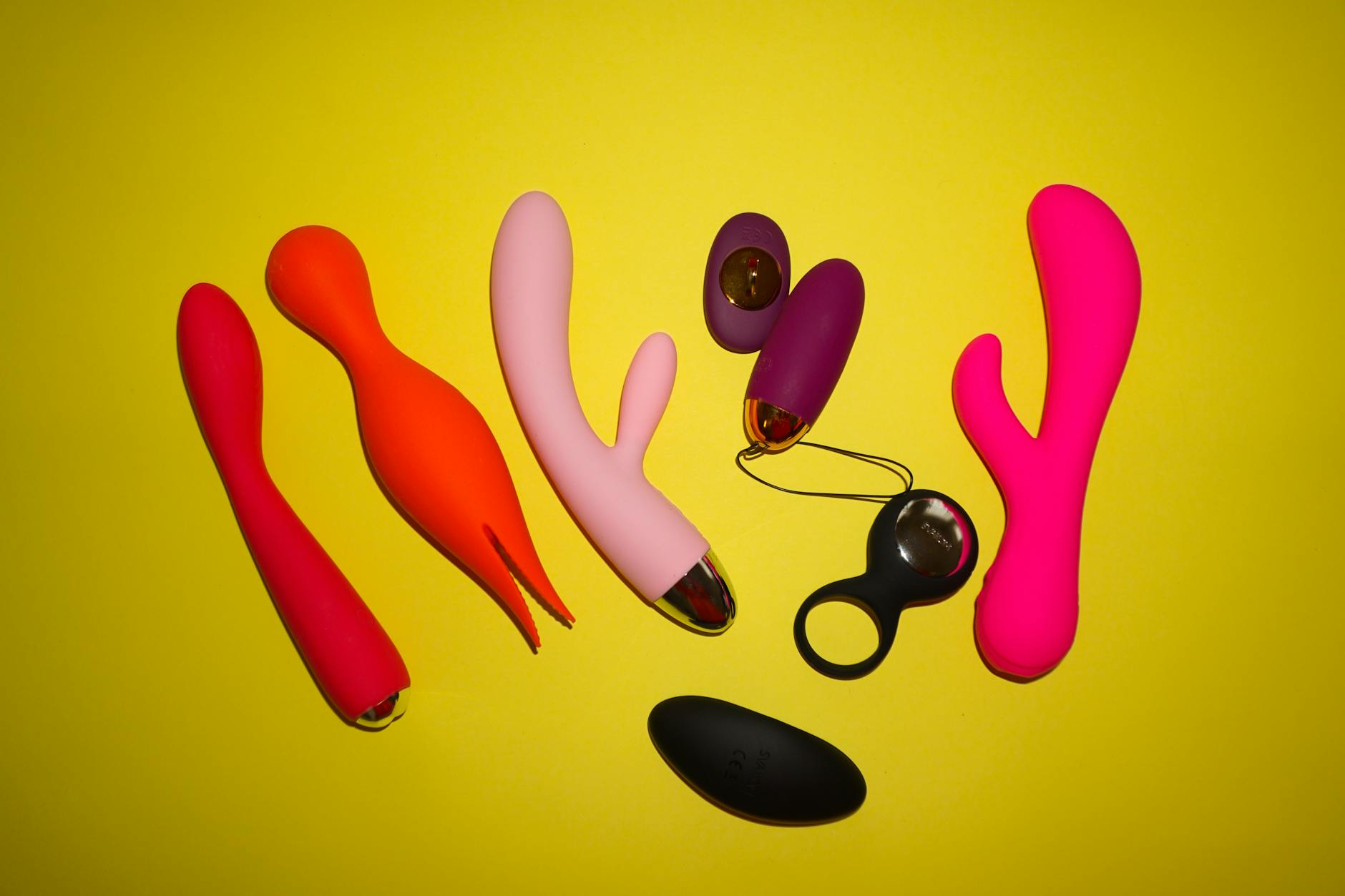
Why Lemon Vibrators Feel Different After Starting Birth Control
Your body hasn't broken. Your hormones have shifted. Here's what changes with sensation, arousal, and how your lemon clitoral vibrator responds to your new baseline.
You start the pill, patch, shot, or ring. Everything is fine for a week or two. Then you grab your lemon vibrator, settle in, and something feels off. The sensations aren't as sharp. Arousal takes longer to build. Maybe you can't reach orgasm at all, or it feels muted when you do. You wonder if you've done something wrong, if the toy is broken, or if something's changed with your body.
Birth control isn't just about stopping ovulation. It floods your system with synthetic or bioidentical hormones that suppress your natural hormonal peaks and valleys. Estrogen and progesterone are not just reproductive hormones. They're neurological hormones. They live in your brain, your nerves, and your sensory pathways.
When you start birth control, your dopamine and serotonin levels shift. These are the neurotransmitters that fire during arousal and pleasure. Your vaginal tissue becomes thicker and more lubricated (which sounds good until it means stimulation feels less direct). Your clitoral blood flow changes too. All of this rewires how your body responds to stimulation, including the suction and gentle pressure of a lemon clitoral vibrator.
Here's the part that matters: this is not permanent, and it's not a problem. It's an adjustment.
Reduced clitoral engorgement. Arousal works through blood flow. When you're turned on, blood rushes to your genitals, and your clitoris engorges slightly, making nerve endings more sensitive. Birth control can dampen this response. Your clitoris still responds to the lemon vibrator's suction, but the baseline arousal might take longer to reach, which means it takes longer for those nerves to wake up.
Changes to genital sensation. Estrogen affects how many pain and pleasure receptors are active in your genital tissue. On hormonal birth control, you're running on a synthetic or lower-dose estrogen level, which can make sensation feel more diffuse or less intense. It's not that the nerves have disappeared. It's that the signal isn't as loud.
Mood and mental clarity shifts. Some people feel more stable on birth control. Others feel slightly flattened in their emotional range. This emotional landscape absolutely affects sexual response. If your brain is quieter or more muted, your body often follows.
Most people adapt within 3 to 6 months. Your body recalibrates, your brain adjusts to the new hormonal baseline, and sensation typically returns to something closer to baseline. But "adaptation" doesn't mean waiting passively.
If you're using lemon vibrators or other clitoral vibrators and finding sensation muted, here's what I recommend.
Start with pattern 1 or 2 and stay there longer. Don't jump to higher intensities immediately. Let your body's sensitivity catch up to the stimulation. Give yourself 15 to 20 minutes of warm-up time instead of 5 to 10. The adjustment isn't a failure. It's signal-building.
Use a water-based lubricant even if you don't feel you need it. Hormonal birth control can reduce natural lubrication slightly. A little external lube reduces friction and helps the lemon vibrator's suction work more effectively, which means better nerve stimulation with less effort.
Don't blame your toy or yourself. The impulse when sensation feels different is to think you're broken or the lemon adult toy is defective. Neither is true. Your body is in a temporary recalibration phase. This is so common that it's predictable.
Here's the contradictory part that nobody expects. For some people, starting birth control actually increases sensation and arousal. This usually happens when the person was dealing with unmanaged hormonal fluctuations before. The menstrual cycle can be brutal: some days you can't orgasm at all, other days you come easily, and the whole thing is exhausting to navigate. Birth control smooths that out. For these people, lemon vibrators and other clitoral vibrators suddenly feel more responsive because their baseline arousal is more stable.
If this is you, you haven't lucked out permanently. You've gained a predictable baseline. Use it. Track what works. Build that knowledge.
Not all birth control affects sensation the same way.
Combined hormonal methods (pill, patch, ring). These combine estrogen and progestin. They tend to have the most noticeable effect on sensation because you're introducing synthetic estrogen daily or managing a continuous dose. The effect is usually reversible and typically feels strongest in the first month or two.
Progestin-only methods (minipill, shot, implant). These skip estrogen entirely. Some people find progestin-only methods are less likely to dull sensation because there's less hormonal suppression overall. Others find the opposite. Individual variation is real here.
Non-hormonal methods (copper IUD, barrier methods). No hormonal effect on sensation, but also no period suppression. Your natural hormonal cycle continues, which means sensation will fluctuate throughout your cycle.
If sensation changes bother you after a few months on one type of birth control, switching to a different formulation or method is worth discussing with your doctor. This isn't a trivial preference. Sexual wellness is part of overall wellness.
Warm up your body first. Spend 5 to 10 minutes with your partner or alone doing things that make you feel sexy before you even reach for the lemon vibrator. Watch something that interests you, read erotica, touch yourself without the toy. Get your brain in the game. Birth control makes mental arousal more important, not less.
Extend your pre-stimulation time. Use your hands, your partner's hands, your mouth. Get to a point where you genuinely want the vibrator, not just reaching for it to make something happen. The lemon clitoral vibrator works best when your body is already primed.
Start at lower intensities and go slower. Don't skip straight to pattern 3. Begin at pattern 1 or 2. If it's not working after a few minutes, move up one level. Build the sensation gradually. Your nerves will respond more readily when you're not forcing intensity.
Notice what's changed and work with it. If it takes longer to build arousal, that's the new normal for now. If you find certain patterns feel better than others (something about the rhythm or pressure), lock that in. You're not trying to go back to how it was before birth control. You're finding out how it works now.
Here's the important caveat. If you started birth control and your sensation became numb or completely deadened within days, or if it hasn't improved at all after six months, that might not be a normal adjustment. It could be an emotional response to taking the medication, an interaction with something else you're taking, or a sign that this particular birth control isn't right for your body.
Talk to your doctor. Bring this up specifically. "My sensation and arousal have changed significantly since starting this birth control, and I'd like to explore whether it's the hormone dose or the formulation" is a completely reasonable medical conversation. You're not overreacting. Sexual function is part of your health.
The same goes if you're experiencing numbness, loss of sensation in your genitals, or inability to orgasm that's genuinely distressing. That's worth investigating. It's rare for birth control alone to cause complete sensory loss, but it happens, and if it does, you deserve an answer.
If sensation feels muted right after starting birth control, here's what typically happens.
Weeks 1 to 2: Mild changes, often barely noticeable. Your body is processing the new hormone level.
Weeks 2 to 8: The shift becomes more obvious. Sensation might feel notably different. This is peak "something changed" territory.
Weeks 8 to 16: Adaptation starts. Your brain and nervous system are recalibrating. Sensation often begins to normalize.
Month 4 to 6: Most people feel their arousal and sensation have restabilized. It might not be identical to before, but it's predictable and responsive.
If you're still dealing with significant sensation loss after six months, that's a conversation to have with your healthcare provider.
If you're with a partner, this shift is happening to both of you, just differently. Your partner might notice you need longer warm-up time or different kinds of stimulation. That's not a referendum on your attraction to each other. It's a signal to adapt together.
Use this as an opportunity to slow down. Spend more time on foreplay. Try new patterns with your lemon vibrator. Explore positions and pressures that feel good now, even if they're different from before. Some couples find this adjustment period actually deepens their intimacy because they have to pay closer attention to what's working.
If you're solo, this is your chance to get to know your body's new baseline. No performance pressure. Just experimentation.
Most people notice stabilization between 3 to 6 months. Some adapt faster, some slower. If you haven't noticed improvement after six months, that's worth discussing with your doctor.
Absolutely. Using a lemon clitoral vibrator during the adjustment period is actually helpful because you're learning how your body responds to stimulation under the new hormonal conditions. Start at lower intensities and give yourself more time.
Yes. Once you discontinue hormonal birth control, your body will typically return to its previous hormonal baseline within a few weeks to a few months. Sensation usually normalizes fairly quickly after stopping.
It can. Combined hormonal methods tend to have more noticeable effects on sensation than progestin-only methods, but individual variation is huge. What affects one person significantly might barely affect another.
Not immediately. Give it at least three months. If sensation hasn't improved and it's genuinely affecting your quality of life, talk to your doctor about trying a different formulation or method. But rushing to switch might mean missing the adaptation period.
Muted or delayed sensation is normal. Complete numbness that doesn't improve is less common and worth investigating with your healthcare provider. You're not overreacting if this is distressing to you.
Birth control changes your body's neurochemistry. That absolutely affects how you experience pleasure and how your lemon vibrator feels. This is not a permanent problem, and it's not something you did wrong. It's an adjustment. Give your body time, give yourself grace, and when it's ready, sensation typically comes back online. If it doesn't, talk to your doctor. Your pleasure matters, and you deserve a birth control method that works for your whole life, not just one part of it.
If you're navigating this shift and want to explore more about how your body responds to different kinds of stimulation during this adjustment phase, reach out. We're here to help you figure this out.
Contact Hello Nancy if you have questions about how lemon vibrators can work with your body during hormonal changes.