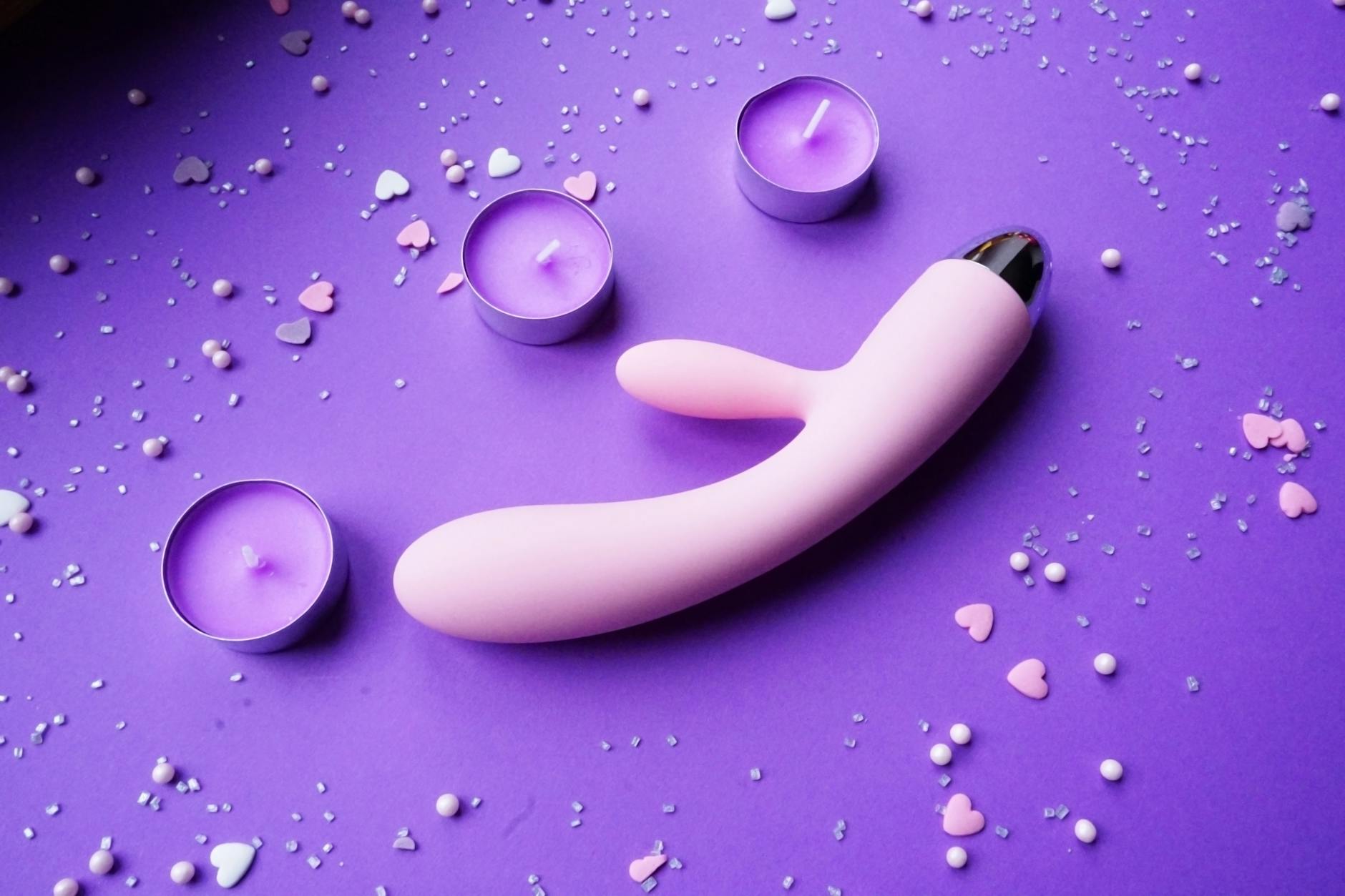
When desire flattens after years together, lemon clitoral vibrators can be less about performance and more about reconnection. Here's how to use them as a bridge back to each other.
Desire doesn't vanish in long-term relationships, but it does flatten. You're managing work, maybe kids, household logistics. Sex becomes something that happens on Friday nights if you're both awake, or it disappears for six months and neither of you quite knows how it happened. You still love your partner. You're just not thinking about touching them the way you used to.
That's the phase when most couples either quietly accept the status quo or try harder at the exact same thing that stopped working. Neither works. What actually works is permission to change the conversation entirely.
A partner who's been with you for five, ten, twenty years knows your body. They know what made you laugh in 2015. They probably know you're tired most of the time. The awkwardness of introducing a toy isn't about the toy. It's about admitting that what you've been doing isn't enough anymore, which feels like critique.
Lemon clitoral vibrators reframe that conversation. Here's why they work so well for couples specifically.
They're not a replacement. A lem vibrator works through gentle suction and pulsing, which is a sensation your partner's hands and mouth can't actually create. You're not saying your partner has failed. You're saying you want a different kind of touch alongside what they already give you. That's expansion, not criticism.
They shift the dynamic from performance to presence. When someone's watching you use a lemon sucker vibrator and it's working, they're not worrying about whether they're doing it right. They're watching you feel good, which is genuinely erotic for most people. The focus moves from doing to witnessing.
They break the pattern without starting from zero. You don't have to have "the conversation" about whether you still find each other attractive. You're just trying something new together. Low stakes, high curiosity.
Introducing a toy into a long-term relationship fails most often not because of the toy but because the emotional groundwork isn't there. You can't hand your partner a lemon clitoral vibrator and expect it to magically fix distance you've been building for years.
What you need first is honesty about where you are.
"I miss us physically, and I want to find our way back" is different from "I'm bored and we need to fix this." One is collaborative. The other sounds like blame. Spend time on the right framing.
Say something like this: "I've been thinking about us, and I want to explore some things together that might feel new to both of us. I found something that looked interesting." You're not saying anything's broken. You're saying you want to build something.
If your partner's first response is defensive, don't push. That's data. They might need time, or they might need reassurance that this isn't about dissatisfaction with them specifically. Sometimes a simple "I love you, and I want to feel closer" is enough to shift the conversation.
Timing matters. Don't bring this up when you're both tired, stressed, or when there's unresolved conflict. Choose a moment when you're both relatively relaxed and there's time to talk without rushing.
Start small. "I saw this device that stimulates in a way hands can't quite reach, and I'm curious about trying it with you." That's it. You're not launching into a whole thing.
Show them what it does without pressure. Let them hold it, turn it on at the lowest setting, feel how it works. Removing mystery reduces anxiety. A lemon vibrator is simpler than most toys, which helps. There's no intimidating size or complicated settings.
Start solo or together, depending on your comfort. Some couples feel less pressure when the person with a vulva explores it alone first while their partner watches. Others prefer discovering it together from the start. Neither is wrong. The point is collaboration, not performance.
Expect awkwardness. That first time will probably feel a little strange, a little funny, maybe a little vulnerable. That's normal. It usually takes two or three times before it feels integrated into your usual rhythm.
One of the most overlooked benefits is that a lem vibrator fundamentally changes the sensations available during partnered sex. If you're using it during penetration, the stimulation is totally different from what either of you can create alone. It opens up new sensations, new rhythms, new ways to be together that don't exist without it.
For partners with vulvas who struggle to orgasm during penetration, a lemon vibrator (used externally during sex) can be the actual bridge that makes that possible. That's not about lacking anything. That's about physics and nerve distribution. Using a lemon sucker alongside your partner's body can make the entire experience feel more connected, not less.
It also takes pressure off performance. If you know an orgasm is likely because of the tool, the anxiety drops. Your partner isn't stressed about doing the right thing. You're not stressed about whether your body will cooperate. Everyone relaxes, and paradoxically, that's when the best sex happens.
If you and your partner have been in the desert for a while, a toy alone won't fix the structural distance. But it can be the first step toward rebuilding if the emotional foundation is still there.
What helps most: framing it as mutual exploration rather than problem-solving. "I want us to be playful again" is very different from "Our sex life is broken." The first opens doors. The second triggers defensiveness.
Use it to get curious about each other again. Not just about bodies, but about what feels good, what's changed, what you've never tried. That curiosity is actually what builds intimacy long-term. You're treating your partner like someone you're still learning about, not someone you've entirely figured out.
Be patient. If you've been disconnected for a while, one night with a lemon vibrator won't restore what you had. But it might break the ice enough to start a series of conversations and experiences that do.
Not if you frame it right. The conversation is "I want to explore something new together," not "You're not enough." Most long-term partners actually feel relieved that you're taking responsibility for your own pleasure rather than expecting them to somehow read your mind after a decade together. If your partner does feel threatened initially, that's worth talking through. Sometimes it's not about the vibrator. It's about unspoken resentment or distance that the vibrator just made visible.
That's actually really common and completely normal. When someone else is holding the vibrator, they control the pressure, the angle, the pacing. It'll feel different because it is different. Your partner might discover angles or rhythms you never found on your own. Treat this as collaborative discovery, not comparison. Some people find partner-controlled feels more intimate. Others prefer having full control. You might prefer both at different times.
Yes. Lemon vibrators are some of the easiest entry points into partnered toy use because they're simple, the sensation is intuitive, and there's no learning curve. You turn it on, press it against skin, adjust the intensity. That's the entire operation. There's nothing complicated enough to be distracting or intimidating.
Absolutely. This is one of the most common ways couples use lemon clitoral vibrators. External stimulation during penetration opens up sensations that don't exist otherwise. If you've been together a long time and penetration alone doesn't create much pleasure, adding external stimulation can completely change the experience for both partners.
Go slow. You don't have to integrate it into penetrative sex immediately. You might use it while you're kissing, while you're lying together, while you're just exploring touch. You can also use it solo first and let your partner watch, which removes some of the pressure of being simultaneously stimulated and observed. There's no timeline. The best use is whatever feels consensual and exciting to both of you.
Don't ambush them with the vibrator. Have a conversation first. "I've been thinking about how we could feel closer again, and I'd like us to explore some things together. Are you open to that?" If they say yes, you can then introduce the idea of a tool. If they need time, give them time. But the conversation about reconnection needs to happen before the object shows up.
A lemon vibrator isn't a fix for a broken relationship. But for couples who still love each other and still want each other, just in a depleted or routine way, it can be the permission slip to start exploring again. It says: "Our sex life doesn't have to be what it was. It can be something different, something we're both discovering together."
That's more powerful than any single tool. When you and your partner can say yes to trying something new together, you're saying yes to curiosity about each other. And that's where intimacy actually begins.
If you're thinking about reconnecting with your partner and want more guidance on communication or rebuilding that layer of intimacy, reach out. Couples who prioritize pleasure and play actually stay connected longer. You deserve that.
Gottman, J. M., & Silver, N. (2015). The Seven Principles for Making Marriage Work. Harmony. Clinical research on couples therapy outcomes and sexual satisfaction.
Rosenberg, K. P., & Feder, L. C. (Eds.). (2014). Behavioral Addictions: Criteria, Evidence, and Treatment. Academic Press. Peer-reviewed framework for understanding changes in intimate behavior over relationship lifespan.
Perelman, M. A. (2015). Psychological Factors and the Urological Perspective in Erectile Dysfunction. Journal of Sexual Medicine, 12(7), 1446–1446. Covers performance anxiety in long-term partnerships and the role of novelty.