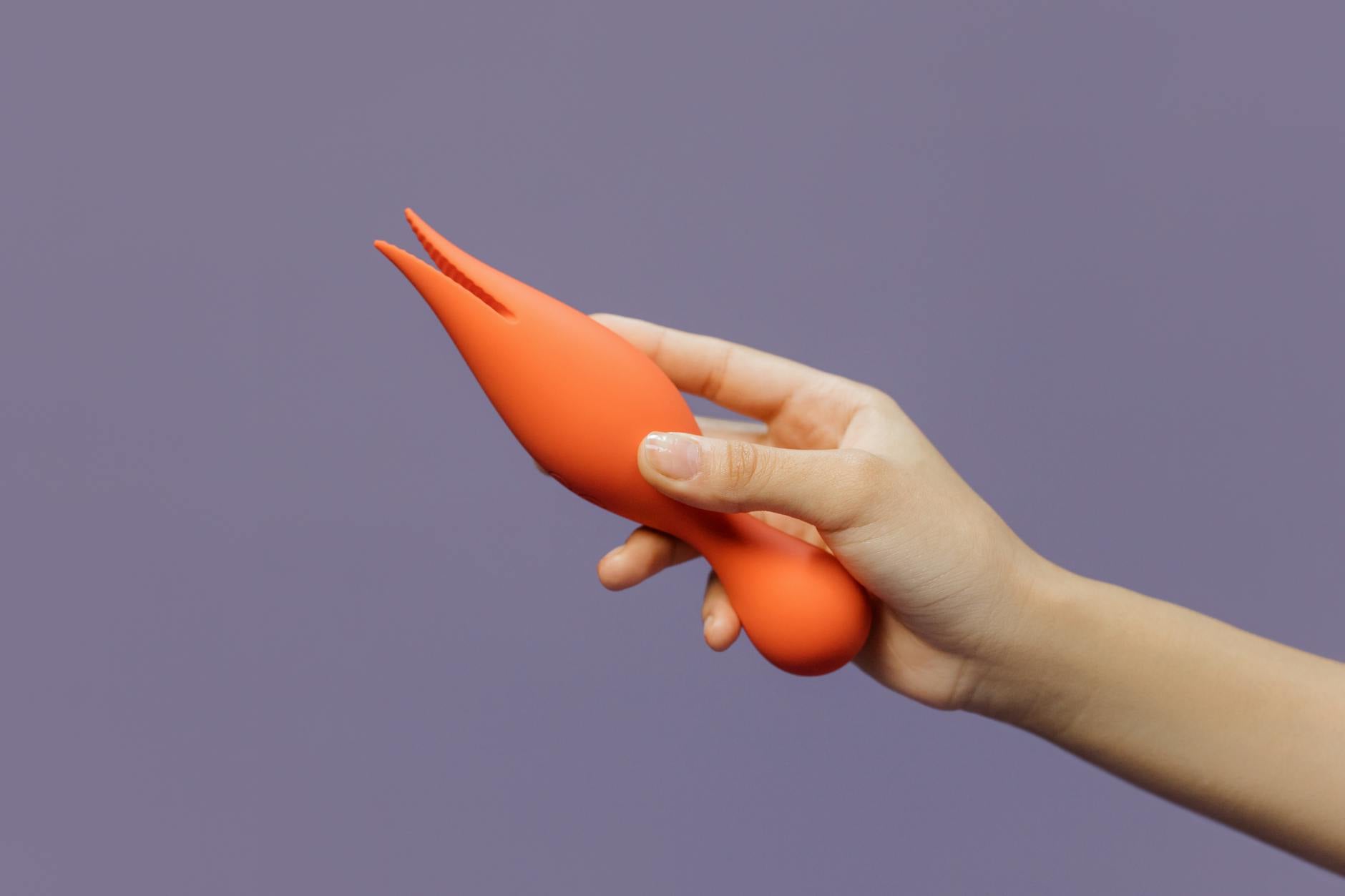
Infidelity doesn't kill your ability to have pleasure together. It kills trust, novelty, and the feeling of being chosen. The sex part is often where the real healing begins, because it's the one place where vulnerability and presence are non-negotiable. You can't fake an orgasm with a partner you're trying to rebuild with. Not for long, anyway.
Most couples who stay after infidelity tell me the same thing: they tried to jump straight back into their old rhythm, and it felt hollow. Like eating a meal you used to love after losing your sense of taste. The mechanics were there, but the meaning was gone. That's where a lemon clitoral vibrator changes the conversation entirely.
Here's the thing about rebuilding intimacy after betrayal: you need something that resets the baseline. A clitoral vibrator does that. It says, "This is different. We're not pretending everything is the same." And that honesty opens a door that apologizing alone never will.
When a couple introduces a lemon vibrator together, they're doing three things at once. First, they're admitting that pleasure matters enough to be intentional about it. Second, they're removing performance pressure, because sensation becomes about the tool, not about how well one person can satisfy the other. Third, they're creating a shared novelty that belongs to both of you, not to the version of the relationship that broke.
The lemon sexual toy design is particularly useful here because it's not aggressive or intimidating. It's gentle, precise, and the suction pattern gives pleasure without requiring the kind of eye contact and responsiveness that feels too vulnerable when trust is still fractured.
Before you introduce any lemon vibrator into your reunion, you need to separate two conversations that most couples accidentally merge.
Conversation one: "What do I need to feel safe and chosen again?" This is about the affair, about what went wrong, and about rebuilding trust. It's not about sex.
Conversation two: "How do we want to rebuild pleasure together?" This is about creativity, novelty, and what you both want moving forward. It's deliberately separate from the betrayal conversation.
Most couples skip conversation one and jump straight to conversation two, which feels like making up for something without actually fixing it. If you do that, the vibrator becomes a band-aid, not a tool.
So start here: tell your partner what safety looks like. What rebuilding trust means to you. Get specific. It might take weeks. Then, separately, you can ask: "Would you be open to exploring pleasure in a new way together?"
Don't make it a performance or a test. Don't position it as "proof" that you're moving forward.
Instead, frame it as curiosity. Maybe during a conversation about what you both want in this next chapter, one of you mentions having always been curious about a lemon clitoral vibrator. That's actually the perfect opening. "I've read that people really love them. Would you want to try one together?"
When you're ready, choose a time when you're both relaxed and there's no rush. The first time using any lemon vibrator should be low-stakes. Maybe one of you uses it while the other watches and touches. Maybe you both take turns exploring it solo, then together. There's no script.
The real power is in the novelty and the collaboration. You're choosing this together, which is different from the choice that was made without you.
A lemon clitoral vibrator works through suction, not vibration. That matters because it feels different from anything you've done before, which is the point. The sensation is concentrated, building gradually, and it's impossible to fake a response to it. Your body will tell the truth, which means your partner can't wonder if you're just going through the motions.
That honesty in pleasure is what rebuilds intimacy. When your partner sees you respond genuinely to sensation, without performative enthusiasm, something shifts. They're not performing for you either. You're both present.
For the penetrating partner, watching a partner use a lemon vibrator can also feel like reclaiming the role of lover in a different way. It's not about replacing them. It's about them choosing pleasure in front of you, and you being invited to witness and participate. That's vulnerability on both sides.
Here's what I usually tell couples in this position: you can't introduce a vibrator while you're still in the acute phase of processing the affair. You need to have done enough of the trust-rebuilding work that you can actually be present with each other instead of stuck in defensiveness or resentment.
If you're still in "I need to prove I'm sorry" mode, sex becomes transactional and a vibrator becomes just another transaction. But if you're far enough along to say, "I want us to rebuild something better, not go back to what we had," then a lemon vibrator becomes an actual tool for that rebuilding.
The timeline is different for every couple. Some people are ready in a few months. Others need a year or more. Both are normal. There's no prize for being faster.
Lemon vibrators and lemon sexual toys have a focused, gentle approach that works particularly well when you're both anxious. The suction pattern is soothing in a way that aggressive vibration isn't. It builds sensation without demanding anything from you. You can relax into it instead of bracing.
Also practically: a lemon clitoral vibrator is easy to understand and use without a manual or extensive education. There's no complexity, no buttons you accidentally hit wrong, no performance to manage. That simplicity matters when you're already managing a lot emotionally.
Many couples also find that the novelty of a tool designed specifically for clitoral pleasure helps them stop comparing themselves to whatever happened during the affair. You're not competing with a fantasy. You're building something new together.
Sometimes introducing any vibrator, including a lemon clitoral vibrator, reveals that the real issue isn't pleasure. It's that you don't actually want to be in the relationship anymore. And that's important information. A vibrator isn't a substitute for the work of deciding whether to stay.
If you find yourself resistant to the idea of pleasure with your partner, or if you use the vibrator and realize you feel nothing, that's not a failure. That's data. It might mean you need more time. It might mean you need professional help. It might mean infidelity broke something that won't heal.
All of those are legitimate. Your body knows before your brain catches up.
Rebuild intimacy on purpose, not by accident. A lemon clitoral vibrator is one tool for that, not a solution by itself. But if you both choose it consciously, it can be the thing that says: "We're starting over, and this version is going to be different."
Absolutely. In fact, many therapists recommend it. Pleasure and healing exist in parallel. The vibrator is about reconnecting; therapy is about processing the betrayal. They work together, not against each other.
No, it's admitting that you want to rebuild something better. Plenty of couples who never experience infidelity introduce vibrators because they want more creativity and pleasure. This isn't weakness; it's intentionality.
Listen to why. Often, the resistance isn't about the vibrator itself. It's about what they think the vibrator represents: that they're not enough, that you're not satisfied, that this is proof the relationship is broken beyond repair. Have that conversation. Separate it from the vibrator conversation. Then revisit.
There's no timeline. But a good rule: you should be far enough along in recovery that you can laugh together, that you're not bringing up the affair in every conversation, and that you both genuinely want to be rebuilding, not just staying out of habit. That's different for every couple.
Not at all. In fact, it often feels less threatening. It says, "I want us to have something new together," which is different from avoiding accountability. Just make sure you've done the hard conversations first.
Most first-time experiences with any new intimate tool feel a little awkward. That's normal and fine. The second time is usually easier. If it stays awkward after a few attempts, talk about why. The goal is connection, not a perfect experience.