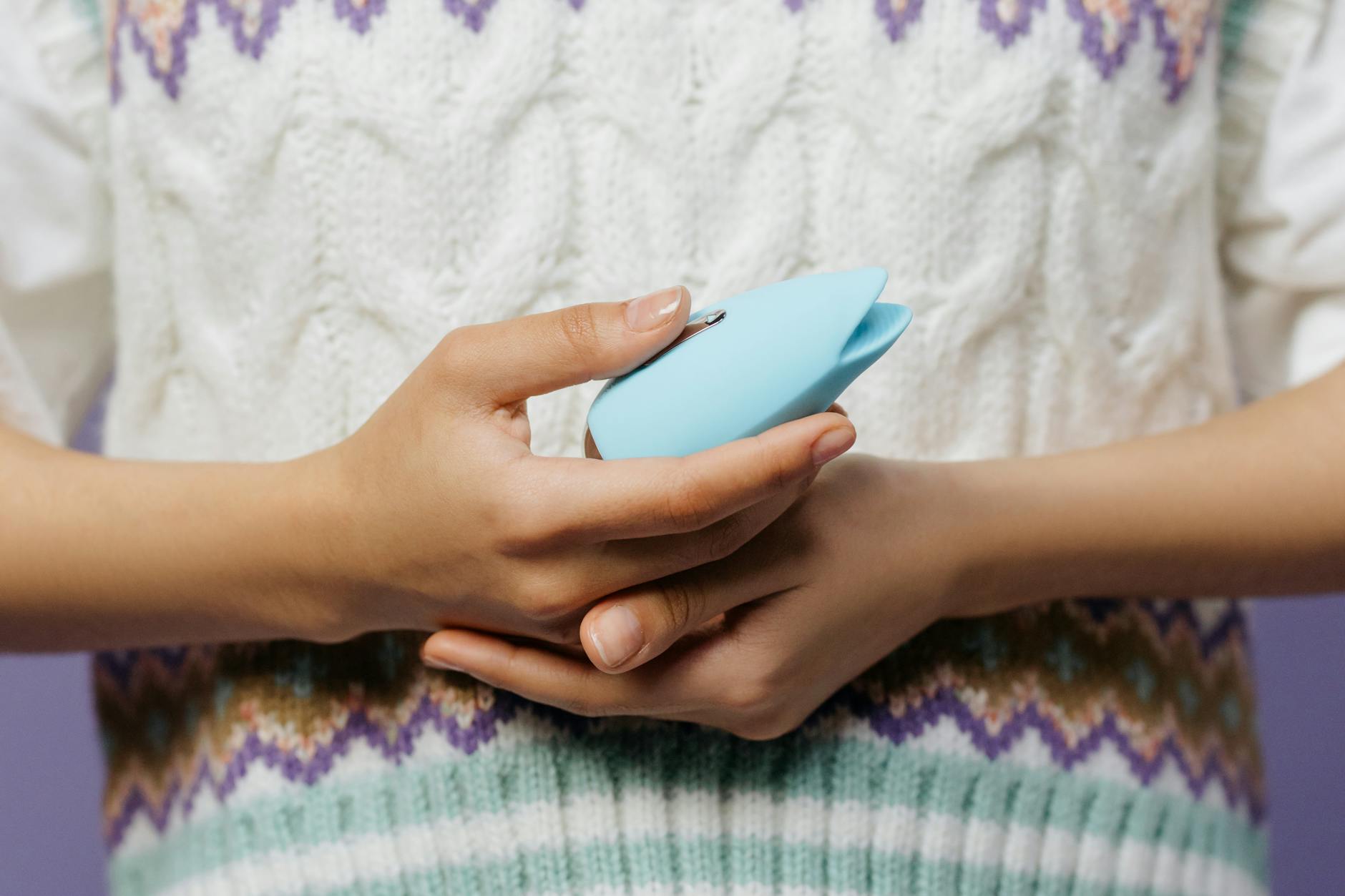
How to Use Lemon Vibrators When Pleasure Feels Numb After Grief
Grief doesn't just affect your emotions. It disconnects you from physical sensation, desire, and pleasure. Here's how lemon vibrators and intentional practice help you find your way back.
Grief does something you might not expect: it disconnects you from your body. Not metaphorically. Physically. Loss triggers a protective shutdown in the nervous system. Your body literally reduces sensation, dampens arousal signals, and makes pleasure feel distant or impossible. You can be touched and feel nothing. You can want to feel pleasure and hit a wall of numbness instead.
That's not broken. That's grief doing what it's designed to do. Your system is protecting you.
But protection has an expiration date. At some point, numbness stops serving you and starts isolating you further. That's when tools like lemon clitoral vibrators matter. Not as a cure for grief. As a bridge back to sensation.
Here's what's happening in your nervous system during heavy grief. Loss activates your parasympathetic nervous system. Your body goes into a state of conservation. Cortisol and adrenaline spike, then drop. Dopamine depletes. This survival response is wise in the acute phase. But it has a cost: sensation dulls. Touch feels muted. Arousal takes enormous effort to trigger.
Physically, blood flow to the genitals decreases. Lubrication slows. The clitoris becomes harder to stimulate in the usual ways. Standard vibrators demand more friction and intensity to register. You push harder, feel frustrated, and often give up.
Lemon sexual toys work differently. The suction-based design of the Lem doesn't require the same mechanical intensity. It works with gentle pressure instead of direct friction. For someone whose nervous system is protecting itself, that matters. A lot.
Three things happen to pleasure during acute grief. Understanding them helps you know you're not broken.
Attention collapse. Your brain is busy. Grief demands cognitive resources. You can't simultaneously process loss and build arousal. Arousal requires focus. Right now, focus is survival.
Emotional flooding. Some people experience the opposite of numbness. Touching yourself brings tears instead of pleasure. Your body is processing grief through sensation. That's real. That's also not the time to push toward orgasm. You're grieving.
Desire absence. This is the loneliest part. You might feel ready physically but discover desire hasn't caught up. You want to want pleasure. Your body won't cooperate. That gap between intention and capacity creates shame that's entirely unnecessary.
The first mistake people make is trying to fake readiness. You decide you should want this. You grab a vibrator. You expect the old response. When it doesn't happen, you feel worse.
Instead, start with honest assessment. Answer these questions honestly.
Do you want to explore pleasure right now, or do you think you should? If it's should, pause. There's no timeline on grief. If it's want, continue.
Can you sit with sensation without needing it to lead to orgasm? Grief-era pleasure is often about reconnecting with your body as a living thing, not about the destination of climax.
Do you have 15 minutes where grief isn't actively urgent? Not where you've forgotten it. Where you've created temporary space.
If you answered yes to those, you're ready to begin.
The Lem and other lemon clitoral vibrators are designed for sensitivity. That's the gift when sensation is muted.
Start at the lowest setting. Don't go to pattern 3 or 5. Start at 1. Your nervous system is in protection mode. Gentle stimulation tells your body you're safe. Intensity right now can feel threatening.
Apply the Lem to the external clitoris, not inside. The external clitoral glans has 8,000 nerve endings. When sensation is numb, you need to work with the densest nerve clusters. Suction on the external tissue creates sensation faster than vibration alone.
Breathe consciously. This matters more than you'd think. Grief-related numbness often comes with shallow breathing. You're holding tension in your chest. Start by breathing in for four counts, holding for four, out for four. Your nervous system will begin to shift. Sensation follows.
Don't chase the orgasm. Set a realistic goal: five minutes of noticing sensation without judgment. Not five minutes of trying to come. Five minutes of noticing what you feel. Cold spot, warm spot, nothing, slight tingle. Notice. Name it internally. That's the win.
Expect multiple sessions. Reconnection isn't linear. Some days you'll feel more. Some days less. That's normal. You're not failing. You're slowly teaching your nervous system that sensation is safe again.
Timing matters during grief recovery. Avoid using lemon vibrators when you're in acute emotional crisis. If you're actively crying, or obsessing, or in the middle of a grief wave, your body isn't available. Wait.
The best window is usually late afternoon or early evening, when the initial weight of the day has lifted slightly. Not tired enough to fall asleep, but past the sharpest edge of the day's sadness.
If you have a partner, don't use them as a performance for your partner's benefit. This is solo reconnection work. Your partner's presence can wait until you've rebuilt the internal bridge yourself. That usually takes two to four weeks of consistent, gentle practice.
Even with lemon clitoral vibrators, lubrication matters during grief. Numbness often comes with dryness, because your body isn't producing its own lubrication. That's not a failure. Use water-based lube. A lot of it. More than you think you need.
Lube serves two purposes here. First, it reduces friction. Second, it tells your body you're taking care of yourself. The act of applying lube slowly, intentionally, is part of the reconnection. You're saying: I'm worth touch. My pleasure matters. This body deserves care.
Keep the Lem clean. Grief already makes you feel out of control. Cleanliness is one small thing you can control. Rinse with warm water after each use. Let it air dry. It's a small ritual that matters.
One day, you'll notice something. The vibration felt better than yesterday. You had a genuine moment of sensation. Not climax. Just: that felt good. That moment is significant. Don't minimize it.
From there, sensation builds gradually. You might start exploring different patterns on the Lem. Patterns 2 and 3 become accessible when patterns 1 is no longer enough. You might find yourself using it longer, or more often, because it's starting to feel good instead of like a chore.
When real arousal returns, you'll know. There's a physical difference between numbness-era stimulation and actual arousal. Arousal has a pull to it. Your body wants more. That's when you know you're moving through grief, not just performing recovery.
Grief doesn't end in a neat timeline. But reconnecting with your body's capacity for sensation is a real marker of healing. Lemon vibrators and other clitoral vibrators can be part of that reconnection. Not the whole thing. Part of it.
Completely normal. Grief triggers parasympathetic shutdown. Your nervous system reduces sensation to protect you from further pain. You're not broken or asexual. You're grieving. When the nervous system shifts, sensation returns. That can take weeks or months.
No. Active crying is your body telling you it's still in acute grief mode. Pause. You're not ready. Reconnect with sensation when you can spend 15 minutes without being flooded. That might be two weeks away. That's fine.
They can help you reconnect with sensation more gently than traditional vibrators because the suction-based design works with numb tissue. But they can't rush grief. They're a tool for when you're ready, not a shortcut through grief itself.
Talk to a therapist or grief counselor. Sometimes grief-related numbness has roots in trauma or complicated grief that needs professional support. A vibrator is a tool for reconnection. It's not a replacement for therapy when grief runs deep.
No. Reconnecting with your body's capacity for sensation is part of honoring life. Grief isn't a punishment. You don't have to renounce pleasure to prove your loss mattered. Your body deserves care and sensation while you're healing.
Start solo. Reconnect privately first. Once you feel sensation returning and genuine arousal rebuilding, partner exploration can follow. But the initial work of teaching your nervous system that sensation is safe again is usually best done alone.
Grief numbs pleasure. That's not a reflection on who you are or what you deserve. That's neurobiology protecting you in the moment. When you're ready to gently reconnect, lemon vibrators designed for sensitivity can help. The goal isn't performance or speed. It's slowly, kindly, bringing your body back online. That's enough. That's everything.
When you're ready to explore further, we're here. Start with our buying guide or reach out to chat about what might work best for you at /contact.