How to Use Lemon Vibrators When Your Partner Initiates But You Need More Time
Your partner's ready. You're interested, but your body's not there yet. Here's how lemon clitoral vibrators turn arousal timing mismatches into connection instead of tension.
Your partner leans in. You feel the shift in their energy, the reach, the "I want you" signal. And you... freeze a little. Not because you don't want them. Not because you're angry or disconnected. But because their arousal is here now, and yours is somewhere on the horizon.
This is responsive desire. It's how many bodies actually work, and it's wildly misunderstood in relationships. The assumption is that if you're a good partner, arousal should be simultaneous. It shouldn't. Your nervous system doesn't read their nervous system.
Here's what happens next in most couples: either you push through and have sex that feels obligatory, or you decline and watch your partner's face do that thing it does when they feel rejected. Both paths are resentment waiting to happen. But there's a third option, and it involves understanding what your body actually needs to catch up.
Think of arousal like a dimmer switch. Your partner's switch is already halfway up when they initiate. Yours is at 10 percent. Neither of you is wrong. This is just how responsive desire works.
Women, especially those in long-term relationships, often have responsive desire rather than spontaneous desire. That means arousal builds in response to touch, connection, or circumstance, rather than appearing first in your body. Spontaneous desire people (which skews male, though not exclusively) often experience arousal independently, then seek out a partner to act on it.
When these two patterns meet, the person with responsive desire often feels pressured, and the person with spontaneous desire often feels rejected. The sex that follows, if it happens at all, carries that dynamic.
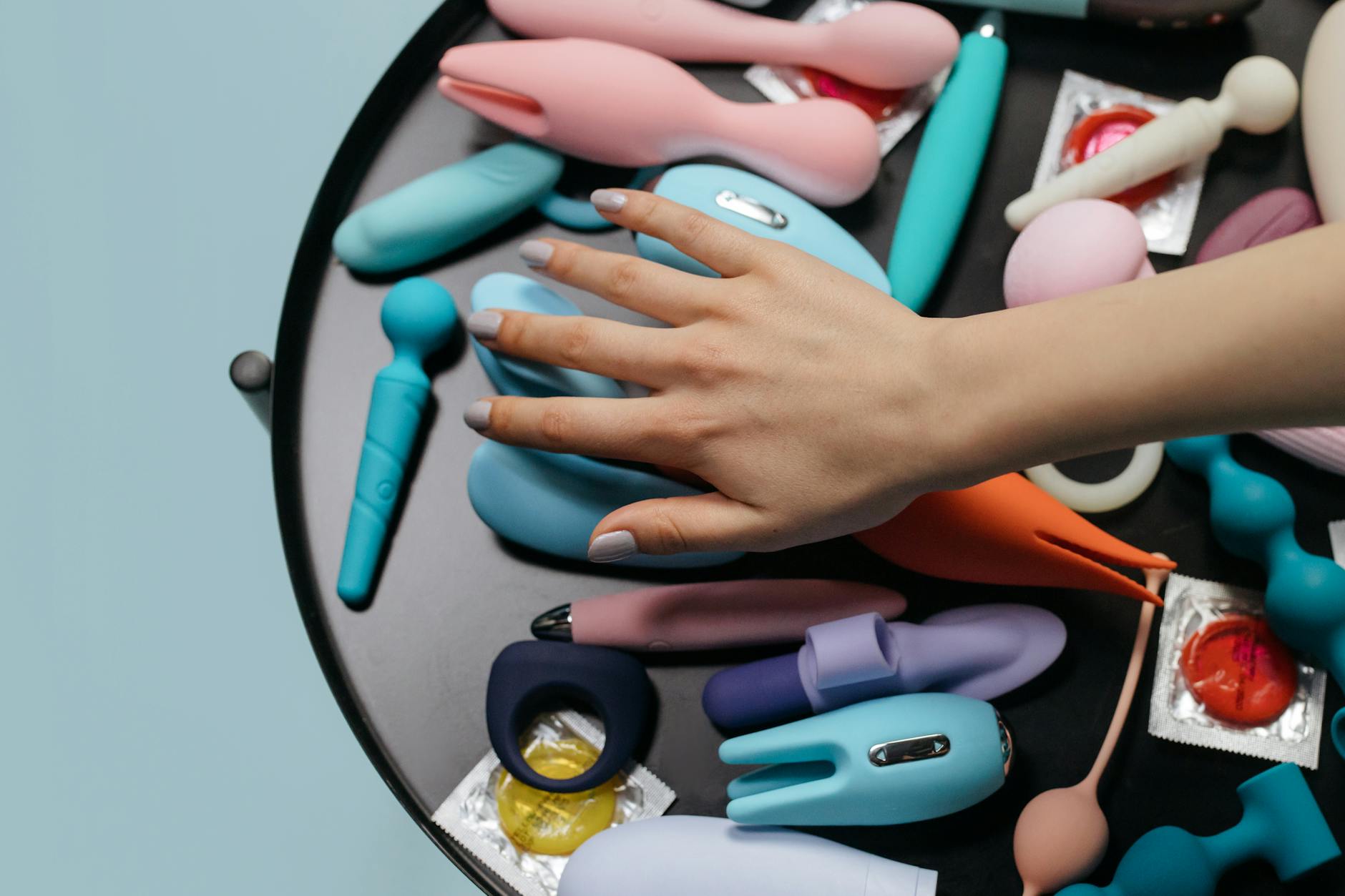
This is where a tool like a Lemon vibrator becomes genuinely useful. Not as a Band-Aid. Not as a performance hack. But as a bridge that lets you meet your partner's arousal timeline without abandoning your own body.
Here's how it works in practice. Your partner initiates. Instead of "not right now" or "give me a minute" (which often means twenty minutes of anticipatory anxiety for them), you can say: "I'm interested. Let me get my body on board." Then you reach for your Lemon.
What happens next matters. Your partner watches you touch yourself. They see you building your own arousal intentionally. They're not waiting passively. They're witnessing you. And you're not forcing your body to respond on someone else's timeline. You're actively building your own.
A Lemon clitoral vibrator works particularly well for this because of the intensity. Air-suction technology gets you to baseline arousal faster than manual touch or standard vibration would. You're not having to spend fifteen minutes getting somewhere. You're accelerating the process deliberately.
Using a lemon clitoral vibrator in this scenario only works if the conversation has already happened outside the bedroom. This is crucial. Your partner needs to understand that this isn't rejection. It's not "I need to get off alone." It's "my arousal pattern is different from yours, and here's how we work with that."
The best version of this conversation happens when you're both clothed, sitting down, not in the moment. You explain responsive desire. You name what you feel when they initiate (interest, maybe nervousness, definitely not arousal yet). You say: "I want to meet you. My body just needs a different on-ramp." Then you explain what you're imagining. Maybe they watch. Maybe they touch you while you use your vibrator. Maybe they're nearby and it's intimate without being simultaneous.
This conversation is the actual solution. The Lemon is just the tool that makes the solution possible.
Scenario one: foreplay that's genuinely mutual. Your partner initiates with kissing or touching. You settle in, bring your Lemon into the mix, and they can see your arousal building in real time. It takes three to five minutes typically. Then you're at baseline, and what happens next is truly mutual.
Scenario two: you build separately, then join. You say you need a minute. You use your vibrator for five to ten minutes while your partner does whatever makes them comfortable. You're on the couch with a blanket, or they're in the other room. Then you come back to them aroused and ready. This works best when there's low pressure. No expectation that you're coming back to have sex immediately. Just that you're coming back more turned on.
Scenario three: they help. Your partner watches or touches you elsewhere while you use your Lemon. This requires the conversation beforehand, but it's often the most connected version. There's nothing solo about it, even though you're the one using the vibrator.
None of these require you to perform arousal you don't feel. None require your partner to feel rejected. And none require you to have sex that feels obligatory.
Couples who figure out their arousal timing differences tend to report higher satisfaction overall. Not because the sex is better. But because both partners stop feeling rejected or pressured. Your partner learns that your slower arousal isn't about them. You learn that their quicker arousal isn't a demand.
You also start to actually enjoy the buildup. When you're not anxious about whether you'll "be ready in time," you can actually feel the sensations. Your body relaxes. Arousal builds more easily (which it always does when there's no pressure). Everyone wins.
There's also something powerful about using a tool intentionally, in front of your partner, that says: "My pleasure matters here. I'm not rushing. I'm not faking. I'm building toward this deliberately." Your partner sees you prioritizing your own arousal. That's attractive. That also models what you want them to do with their own pleasure.
If this dynamic has been unspoken in your relationship, introducing a lemon adult toy becomes a way to finally name it. "I want to try this. Here's why." You're not avoiding sex. You're improving it. You're removing the performance element and replacing it with honest communication.
A Lemon vibrator is designed for intensity and speed. It's designed for people who need strong stimulation to build arousal, or who want to speed up the process intentionally. If you're using one with a partner, you're saying: "I'm taking responsibility for my own arousal, and I'm bringing you with me." That's different from most relationship dynamics, and it tends to be really welcome.
If the arousal timing gap feels huge, or if your partner consistently initiates when you're stressed or depleted, a vibrator alone won't solve it. You might need to talk about workload, emotional labor distribution, or overall connection. A tool helps with the logistics. It doesn't fix the underlying issue if the underlying issue is that you're burnt out.
Similarly, if your responsive desire has recently become non-existent, or if you feel no interest in sex at all, that's worth checking in with a therapist about. Responsive desire can shift with stress, hormones, relationship satisfaction, or medication. A vibrator can help in the moment, but it won't address what's changed in your body or your life.
But for couples where both partners want sex, and the only friction is timing. This works.
Don't lead with "I need a vibrator." Lead with the truth: "I've noticed that when you initiate, I'm interested but my body isn't ready yet. I don't want to keep saying no, and I don't want to have sex that feels obligatory. Can we talk about that?"
Then explain what you're imagining. "I'm thinking maybe I could use something to help my body catch up faster. Something we do together, not instead of together." Most partners who care about you will immediately see the relief in this. You're not rejecting them. You're solving the problem together.
Then you introduce the tool. You explain why a Lemon clitoral vibrator specifically. You order it. And when it arrives, you use it in whatever scenario feels right for you both.
This isn't complicated. It just requires saying out loud what you've probably been feeling quietly for months or years.
Most people reach baseline arousal in three to ten minutes with a Lemon. The exact timeline depends on stress levels, how turned on you are mentally, and the pattern setting you use. Start with lower settings and work up. Speed matters less than finding what your body responds to.
That's a conversation outside the bedroom too. Many partners worry that a tool means they're not enough. That's worth addressing directly. Explain that this is about your body's arousal pattern, not about him being replaced. A vibrator is no more a threat than foreplay is. It's part of how you build arousal together. If your partner remains uncomfortable after you've explained that clearly, couples therapy can help.
Absolutely. Some couples use vibrators as part of their regular sex, not just as a warm-up. Your partner can be inside you or alongside you while you use your Lemon. This can actually increase your pleasure significantly because you're getting both kinds of stimulation. Talk about what feels good and safe for you both.
This is a common worry and largely not supported by evidence. Your body doesn't become "dependent" on vibrator intensity the way it might adapt to a medication. You can use vibrators sometimes and not others. Arousal flexibility is healthy. If you notice you're preferring your vibrator exclusively, that's worth exploring with a therapist, but it's usually about the kind of stimulation, not addiction.
Then you're probably dealing with spontaneous desire yourself, and your partner has responsive desire. Same solution. When you initiate and they're not ready, ask if they want to use a vibrator to catch up. Don't push. Let them decide. The key is that someone with responsive desire often needs to start the physical stimulation in order to feel arousal. If they're open to it, a lemon clitoral vibrator can help them get there.
That's a different question, and it matters. Arousal timing issues feel like: "I want sex with you. I just need my body to get on board." Not interested anymore feels like: "I don't want sex with you, even when my body is ready." The difference is desire directed toward them versus desire that's absent entirely. If it's the latter, you need a different conversation, possibly with a therapist.
Your arousal doesn't have to match your partner's timeline. And your relationship doesn't have to suffer because it doesn't. A lemon clitoral vibrator, paired with honest conversation, turns an ongoing source of tension into a tool for connection. You're not avoiding sex. You're improving it. You're removing shame from how your body actually works, and you're inviting your partner into that process instead of keeping it separate.
If this dynamic has been quiet in your relationship, name it. Have the conversation. Try the tool. Watch what happens when both partners stop performing and start being honest about what their bodies need.
Ready to have this conversation with your partner? Let's talk through it. Reach out if you need support navigating arousal timing mismatches in your relationship.