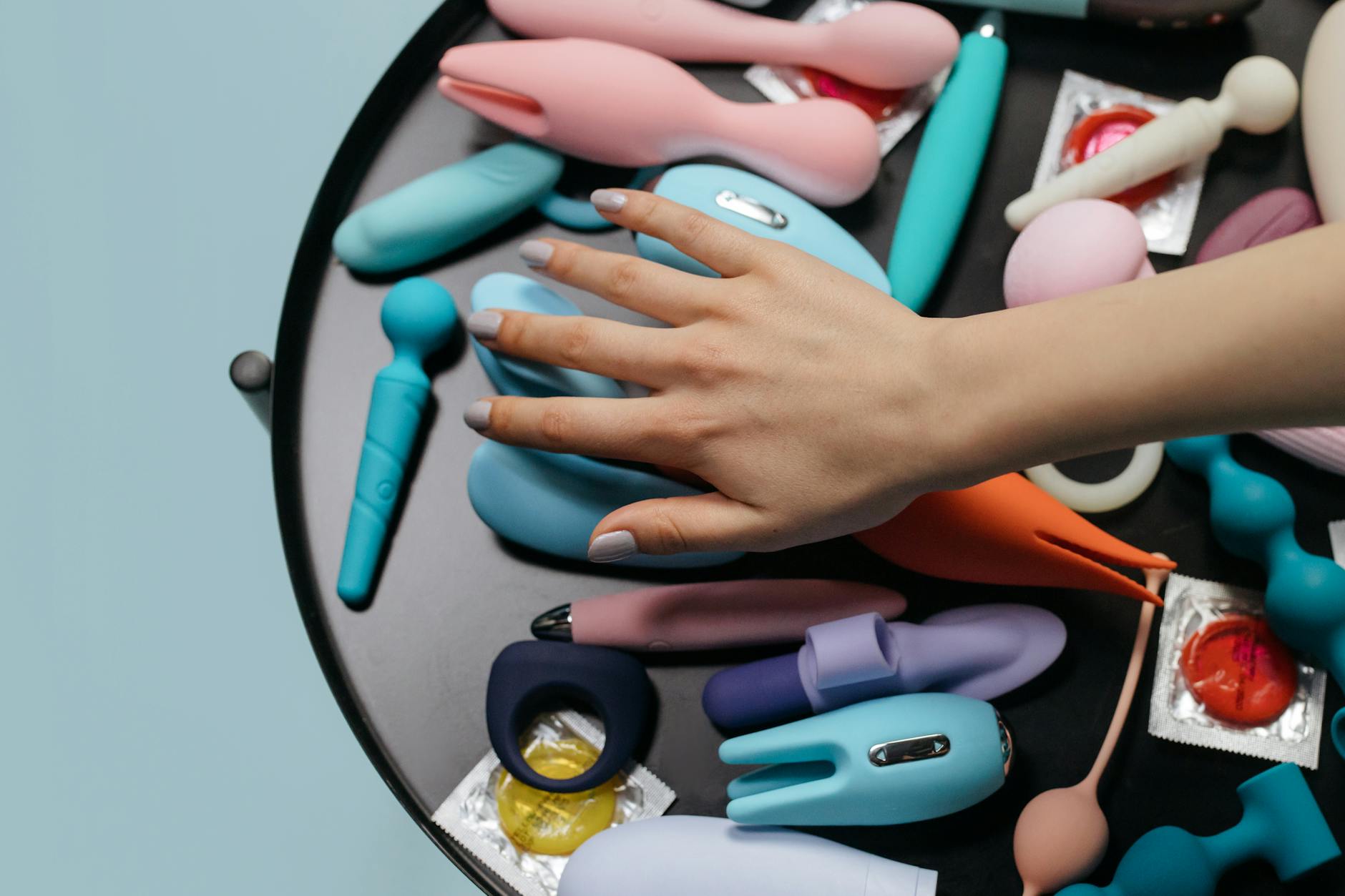
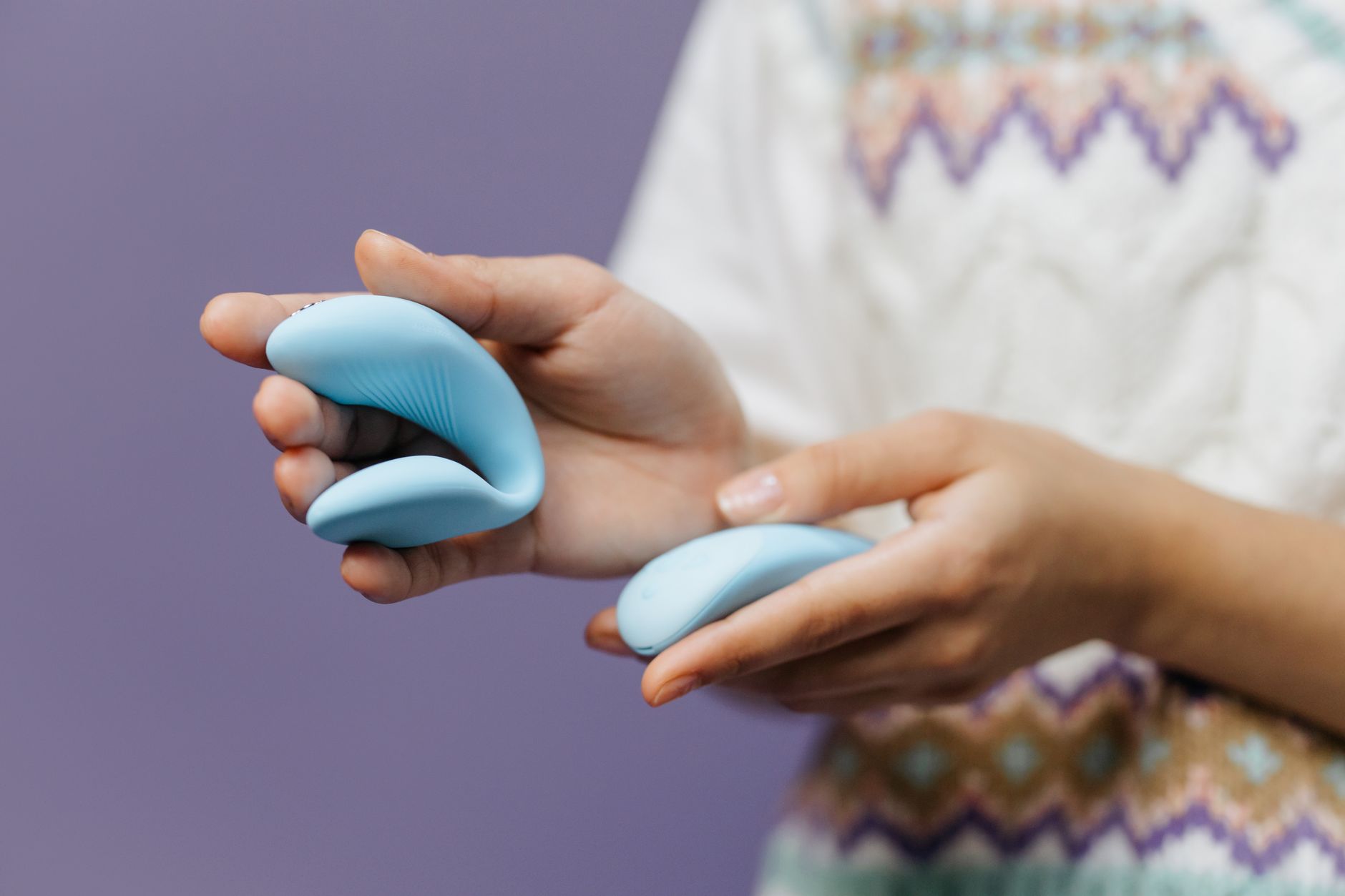
Mismatched desire is one of the most common issues couples bring to therapy. One partner is ready for sex twice a week. The other feels touched out, exhausted, or just... not interested. The person with higher desire feels rejected. The person with lower desire feels pressured. Both start keeping score, which kills everything.
Here's what most couples don't realize: lemon vibrators and other clitoral vibrators can actually solve part of this without either person needing to compromise their own body.
Desire doesn't live in a vacuum. It's shaped by stress, fatigue, hormones, medication, relationship tension, and whether you feel seen. When one partner has significantly higher desire than the other, the gap usually isn't about attraction. It's about capacity, timing, or access to arousal.
The partner with lower desire often isn't saying no because they don't love their partner. They're saying no because:
They're touched out from kids, work, or caregiving.
Arousal takes longer than their partner thinks it should.
They've internalized the idea that their pleasure doesn't matter.
Sex has become a chore or a source of conflict.
They're on medication that's killed their libido (antidepressants, birth control, blood pressure meds).
The partner with higher desire, meanwhile, is interpreting rejection as evidence they're not wanted. Over time, this creates a feedback loop. Higher desire partner initiates. Lower desire partner declines. Higher desire partner stops initiating. Lower desire partner feels guilty. Resentment builds.
Lemon clitoral vibrators (and suction-based toys generally) shift the dynamic because they put pleasure back into solo territory. Here's how.
First, they take off the performance pressure. If your partner uses a lemon vibrator during sex, neither of you is waiting for the other person to achieve something. The person with the vibrator gets exactly the stimulation their body needs at exactly the pace that works. No disappointment. No watching the clock.
Second, they can actually increase arousal for the lower-desire partner. When you're not worried about being "good enough" or "taking too long," arousal often shows up. A lemon clitoral vibrator makes that easier because you're not relying on friction or speed from a partner.
Third, they create a conversation that doesn't feel like negotiation. "I want us to try this together" sounds completely different from "You never want sex." One opens a door. The other closes it.
Before introducing any toy, you need to separate two different conversations that couples usually smash together.
Conversation One: "My body is responding differently" or "Arousal takes me longer" or "I'm carrying too much right now to feel sexy." This is data.
Conversation Two: "I need to feel wanted" or "I'm lonely" or "I miss feeling close to you." This is emotion.
Couples therapists call this "splitting the difference." You can't solve both problems at once. If you try, you end up blaming bodies for what are actually relationship problems, or blaming the relationship for what are actually body issues.
The lemon vibrator conversation happens after you've untangled these two. You say something like: "I know you're exhausted. I also know I need more physical connection. What if we found a way that doesn't rely on you doing all the work?" That's honest, and it's not accusatory.
Once you've had that conversation, here's how to actually use lemon sexual toys together without making anyone feel bad.
For the partner with higher desire: The point isn't to watch your partner use the vibrator and feel like they're choosing the toy over you. The point is you're both getting pleasure at the same time, in the same bed, in the same room. You might be inside them, or you might be using your hands on their body while they use the vibrator on their clitoris. You might be beside them, using your own toy. You're present and connected, but you're not responsible for their orgasm.
For the partner with lower desire: You get to experience pleasure without the pressure of performance. You don't have to worry about whether you're taking too long, or whether your partner's arm is tired, or whether you're "letting them down." A lemon clitoral vibrator gives you back control. And yes, that often increases actual desire. Permission is genuinely aphrodisiac.
For both: The goal isn't orgasm. The goal is feeling wanted, close, and not ashamed. If an orgasm happens, great. If it doesn't, you've still had intimate time together and nobody's resentful.
Lemon clitoral vibrators use suction and pulsation rather than just vibration. This matters for desire mismatch because:
They don't require much input from your partner. You can use them solo or with a partner present. Either way, it's your control.
They tend to work faster than traditional vibrators for people whose arousal is sluggish or complicated. When you're not in the mood and your partner is waiting, speed matters.
They feel less clinical than some toys. There's something about the suction sensation that feels more like stimulation and less like a machine. That emotional difference is real, especially if you've been feeling disconnected from pleasure.
If you're introducing a lemon vibrator to a couple with unequal desire, start on the lower settings. I know that sounds obvious, but here's why it matters: the higher-desire partner often thinks "Let's go straight to the intense setting." The lower-desire partner is already in a fragile place with sex. Lower settings feel less aggressive and allow actual arousal to build.
Start at level 1 or 2. Spend time there. The person using it should feel zero pressure to move up. If arousal is building, great. If it's not, that's fine too.
Many couples I work with find that the lower-desire partner actually enjoys the slow buildup more than they expected. Partly it's the vibrator. Partly it's that their partner isn't watching the clock.
If the desire mismatch has been going on for years, introducing a toy won't fix the real problem. Sometimes lower desire is actually anger dressed up as "I'm just tired." Sometimes it's genuine incompatibility that needs a bigger conversation. A lemon clitoral vibrator can help, but it's not a substitute for addressing what's actually broken.
If you're in that territory, get a couples therapist involved. A good one can help you figure out whether the mismatched desire is a symptom or the actual disease.
Here's what I've seen work in practice. Instead of "Can we use a vibrator so you'll want sex more," try: "I miss feeling close to you. I also don't want to pressure you. What if we found a way that works for both of us, where we both get what we need?"
Then listen. The lower-desire partner might say "I feel bad that I can't match your energy." That's important data. That's shame talking. Address the shame first, before you introduce anything else.
They might say "I do want connection, but sex feels like work." Then a vibrator makes sense. You're removing the work part and keeping the connection.
They might say "Honestly, I'm not sure I'm attracted to you anymore." That's the hardest conversation, and it's the one that actually needs to happen. A toy won't fix that.
Sometimes, yes. Often, the person with lower desire discovers that when there's no pressure and no performance expectation, arousal actually shows up. They might not go from never wanting sex to wanting it constantly, but the gap usually narrows. Other times, it helps you both feel less resentful even if the frequency doesn't change much.
That usually means they're hearing "You're not enough" rather than "I want us to feel good together." Take time to explain that this is about capacity, not attraction. You want them, full stop. You're trying to remove barriers. Frame it as "us" solving a problem, not you bringing in backup.
No. You're in the room together, present, and connected. Using a toy together is collaboration, not infidelity. Many therapists recommend it for exactly the reason we're discussing: it helps couples find a way forward when desire is unequal.
Don't do it mid-conflict. Don't do it during sex. Do it when you're both calm and alone, and frame it as curiosity, not criticism. "I've been reading about how some couples use vibrators to take pressure off, and I wondered if that might help us" is so much better than "We need to fix our sex life."
Then you've learned something. You've learned that the desire mismatch isn't about access to tools or stimulation. It might be about resentment, incompatibility, or something larger. That's useful information for a couples therapist.
Yes. When both partners feel like their needs matter and nobody's performing, emotional connection usually improves. You're not fighting during sex. You're collaborating. That's different.
The goal isn't to use lemon clitoral vibrators and have the problem vanish. The goal is to use them as a bridge while you have the harder conversations about what's actually driving the desire gap. Is it stress? Is it medication? Is it the relationship itself? Is it shame? Once you know, you can actually address it.
Until then, a vibrator gives you a path forward that doesn't require either person to sacrifice their own pleasure or feel ashamed. That's worth something. And sometimes, that breathing room is exactly what couples need to remember why they wanted each other in the first place.
Ready to explore what might actually work for your situation? Let's talk. Reach out to The Lemon Intimacy if you'd like guidance on introducing toys to your partnership.