Honestly? Most people who struggle with orgasm aren't broken. They're thinking too hard. Your brain is literally working against your body right now, and that's not a character flaw. It's a nervous system doing exactly what it's designed to do when it senses pressure.
Here's the thing nobody tells you: performance anxiety during sex isn't just psychological. It's physiological. When you're worried about whether an orgasm will happen, your sympathetic nervous system activates (that's your fight-flight-freeze response). Blood flow constricts slightly. Your pelvic floor tenses instead of relaxes. And the exact conditions that create an orgasm evaporate.
I've worked with hundreds of people trapped in this cycle, and almost all of them describe the same script: "I get close, then my brain shows up asking, 'Is it happening yet?' and then it doesn't." The asking itself breaks the spell.
Three things collide here. First, partners sometimes (usually accidentally, occasionally deliberately) make orgasm the metric of a successful sexual encounter. Second, media and porn have trained us to believe orgasms are reliable, instant, and basically guaranteed if you do it right. Third, and most painfully, many people internalize a belief that if they're not orgasming, something is medically wrong with them.
It's rarely about the plumbing. It's almost always about the context.
When your brain decides that this moment matters, that it has to count, that you're being evaluated on your ability to come, your parasympathetic nervous system (the one responsible for relaxation and pleasure) gets shouldered out. Your nervous system can't occupy both states at once. It's either in rest-and-digest mode or fight-flight. Not both.
The problem with most solutions to this (taking a break, relaxing, thinking of baseball) is that they ask you to override your brain. Willpower rarely wins against your autonomic nervous system. What actually works is changing the conditions so your nervous system doesn't need to override anything.
Here's where this gets interesting. The right tool can bypass the performance anxiety entirely by doing something really specific: it moves the locus of control away from your orgasm and toward the sensation itself.
A traditional vibrator (wand or insertable) mimics hand-on-skin stimulation. It's effective, but it often feels like an extension of exactly the same activity that's been failing to produce an orgasm. Your brain is still in the driver's seat, still checking for results.
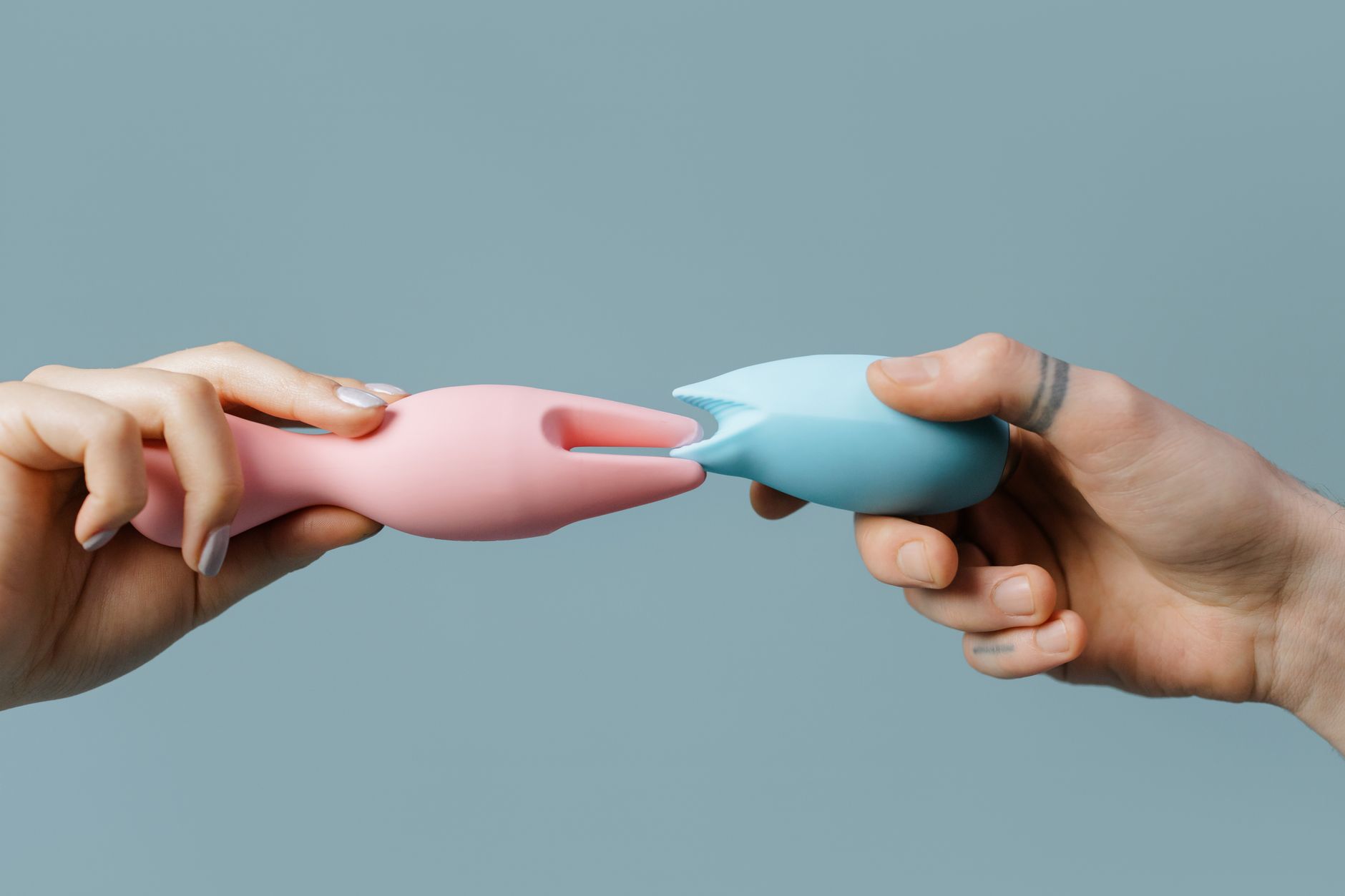
Lemon clitoral vibrators, and specifically air-suction models like the Lem, work completely differently. The suction mechanism creates a sensation that your body hasn't coded as "must produce orgasm now." It feels novel. It redirects your attention from the outcome to the sensation happening right now. That neurological shift is the entire game.
When you're experiencing something you've never felt before, your anxious brain gets distracted. It can't run its usual script because it's busy processing new sensory information. The pressure doesn't vanish, but it gets backgrounded. And that's enough.
Here's the weirdest part. You can't white-knuckle an orgasm with a lemon clitoral vibrator the way you sometimes can with a traditional vibrator. The intensity is not in your control. You're not gripping something and pushing harder. You're receiving stimulation. Your job is literally just to notice it.
That removal of "push harder to get the outcome" mechanics is profoundly disarming for people who've spent years trying to achieve. Your nervous system recognizes, at some level, that striving is pointless here. So it quits.
Once striving stops, relaxation becomes possible. And once your parasympathetic nervous system is actually in charge instead of trading off with panic, orgasm becomes something that can happen naturally. It's not guaranteed. But the conditions are finally right.
If you're going to try this approach, a few practical things help:
Reframe the session before it starts. Not "I'm going to make myself come," but "I'm going to spend 20 minutes feeling sensations and see what happens." That tiny language shift moves you from goal-oriented to exploratory. Your nervous system notices.
Start with the lowest intensity. Patterns 1 and 2 on a Lem exist specifically for this. You're building familiarity with a sensation, not chasing intensity. Give yourself permission to spend most of a session at a low level.
Build a buffer between climax and the timer. If you've scheduled sex, even mentally, you've introduced a deadline. That deadline is the enemy. If possible, create space where you're not thinking about "how long this takes." This is partly why solo exploration often works better initially.
Remove the spectator. One of the cruelest tricks your brain plays is inserting an imaginary observer into your own pleasure. You're watching yourself, evaluating whether it's working. This is why internal distraction during partnered sex is so common. When you're solo with a tool that feels foreign and new, that observer voice quiets down naturally. Use that window.
Most people describe this in similar terms: at some point, you stop thinking and something just takes over. Your body is responding to consistent, novel sensation. Your brain has nothing to check on or worry about. And then, often without warning, you're in it.
Sometimes you orgasm. Sometimes you don't, but you've spent a solid 20 minutes in a state of genuine pleasure without anxiety riding along. That matters just as much. Both outcomes are wins because you've interrupted the cycle.
If you do orgasm, something else shifts. You realize it wasn't about the strength of your willpower or the fitness of your nervous system. It was always about conditions. Once you know that, you can repeat it.
If you've been managing this alone for months and nothing is budging, a therapist trained in sex-positive cognitive behavioral therapy or somatic therapy can help break the pattern faster. I often recommend this approach paired with clinical support, especially if the pressure to perform originates from a partner or a past experience.
Similarly, if physical pain accompanies sex or if there's a history of trauma, that context needs attention before a tool (even a great one) can do its job. A qualified sex therapist or trauma-informed gynecologist is the right first step there.
But if it's pure performance anxiety without physical pain or trauma roots? A lemon clitoral vibrator is genuinely one of the fastest pattern-breakers I know.
No, and that's actually good news. If you could guarantee an orgasm every time, you'd slip right back into performance mode. The point is that lemon vibrators make it possible for orgasms to happen naturally when conditions are right. Some days they do. Some days you get close. Some days you just enjoy sensation. All three are fine.
That's a different conversation, and it's important. If the pressure originates from your partner's expectations or responses, a tool can help you solo, but the relationship dynamic needs addressing separately. If your partner is supportive and you're pressuring yourself, that's easier to untangle. A lemon vibrator can help you prove to yourself that you're capable of pleasure without performance anxiety. That belief carries into partnered sex.
Eventually, yes. That's why most people rotate between a few types of stimulation. But by the time a lemon clitoral vibrator stops feeling novel, you've usually broken the anxiety pattern. Your nervous system has learned that pleasure doesn't require perfect execution. That learning sticks around.
Some people notice within the first session. Most see a real change within three to five solo sessions. The key is removing pressure from those early tries. If you approach it as "I'm testing whether this helps," you've reintroduced performance anxiety. If you approach it as "I'm exploring," your system relaxes.
First, that's not a failure. Second, this approach still helps because it removes the pressure to achieve something you're not sure is real to you yet. Exploration becomes possible without stakes. Many people find their first orgasm through a tool like a Lem, partly because the sensation is novel enough to bypass their anxiety entirely.
Yes, always, even if it seems unnecessary. A little water-based lubricant on the suction cup increases contact and reduces friction that might feel harsh if you're sensitive to pressure. It also gives your skin a cleaner sensation, which helps your nervous system stay in pleasure mode instead of bracing for discomfort.
You don't need to fix your brain or your body to experience pleasure without anxiety. You need conditions that make performance anxiety impossible because you're too busy noticing what's actually happening. That's what lemon vibrators do. They don't create orgasms. They create the conditions where your nervous system can finally relax enough that orgasms become possible.
If you want to explore this further or have questions about how to approach this in your specific relationship or circumstance, reach out to us at The Lemon Intimacy. We're here to help.