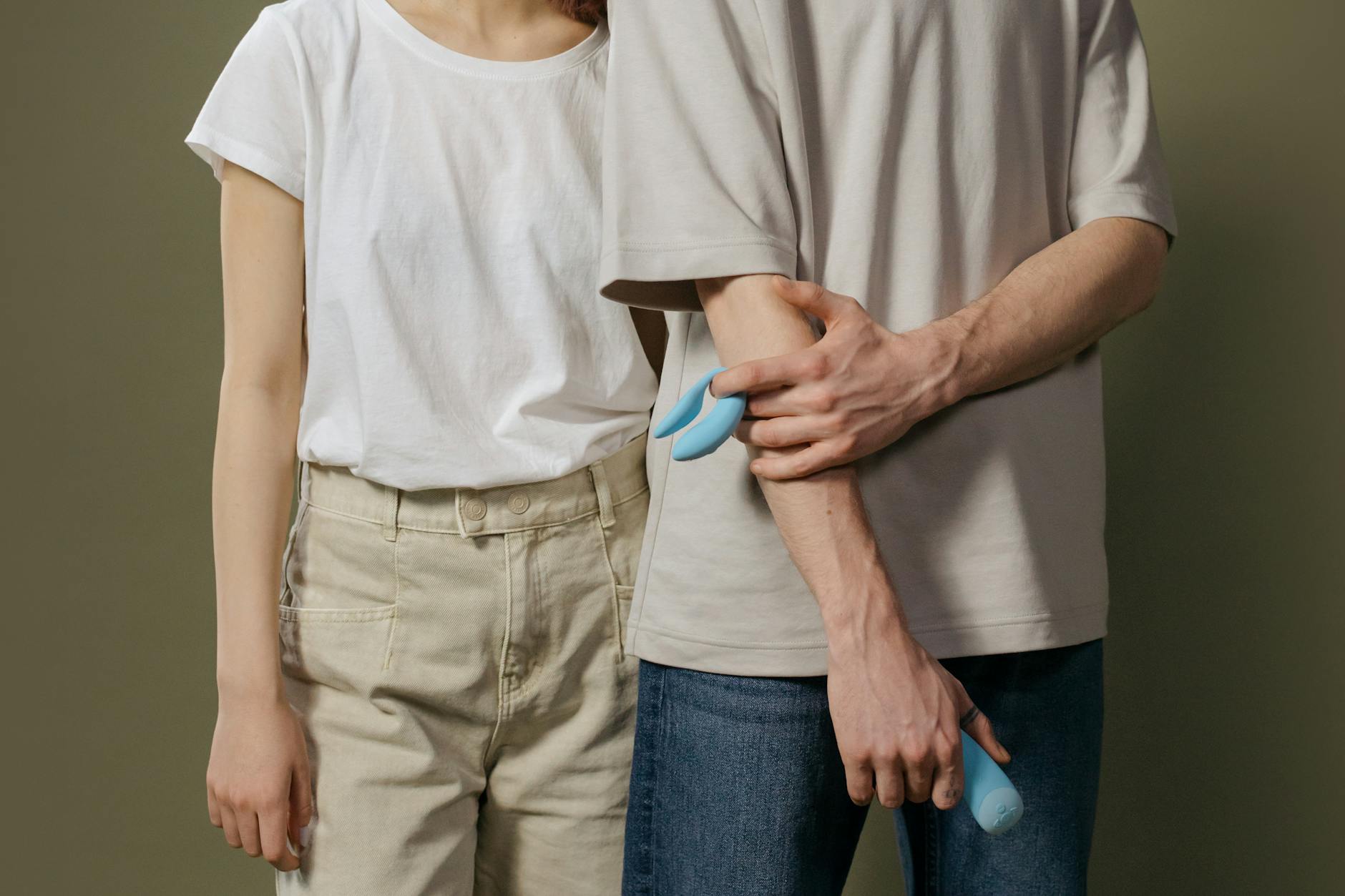
How Lemon Vibrators Help When You Feel Disconnected From Pleasure After Relationship Stress
When conflict and worry tank your arousal, your body shuts down sensation as a protective reflex. Here's what that means, why it happens, and how to rebuild pleasure intentionally.
Relationship stress doesn't just live in your head. It lives in your nervous system. When conflict, distance, or worry settles in, your body does exactly what it's designed to do: it protects itself. Blood redirects away from pleasure centers. Arousal becomes harder to access. Touch that normally feels good starts to feel like static. You're not broken. You're in survival mode.
This is especially true after sustained tension. If you and your partner have been stuck in conflict for weeks or months, your body has learned that closeness might not feel safe right now. Disconnect is rational. And it's one of the most common reasons people come to me feeling like they've lost their capacity for pleasure entirely.
Here's the distinction that matters: low desire is "I don't want to." Numbness is "I want to, but I can't feel it happening." They're different problems with different solutions.
When your nervous system is in a heightened state, the sensory receptors in your genitals literally receive less activation. Your brain is too busy running a threat assessment to process pleasure signals. This is cortisol doing its job. Blood flow concentrates in your limbs and core, not in your clitoris. Sensation dampens. Even direct stimulation might feel muted or distant.
The problem is that many people interpret numbness as permanent. They think, "This is just who I am now." And that thought itself keeps the nervous system locked. Lemon clitoral vibrators work here because they bypass the usual arousal pathway. They don't ask your brain to relax first. They activate sensation directly.
Your parasympathetic nervous system (the part that allows pleasure) shuts down when the sympathetic system (fight, flight, freeze) is active. Relationship conflict keeps the sympathetic system running. It's like trying to have an orgasm while also being chased by a tiger. Neurologically impossible.
What makes this worse: once numbness sets in, many people respond by trying harder. More intense stimulation, more frequency, more pressure. This actually signals danger to your nervous system, which tightens further. The vibration speed or intensity of a lemon vibrator matters less than the permission you give yourself to explore sensation without forcing it.
Lemon suction vibrators work through a mechanism called air-pulse stimulation. Instead of traditional vibration, they create a gentle rhythmic suction that activates nerve endings in a way that feels less demanding than direct contact. For people whose nervous system is defensive, this gentler input doesn't trigger the same protective response.
The other factor is focus. When you're using a lemon clitoral vibrator intentionally, you're creating a container of attention. Your brain gets permission to think about sensation instead of processing conflict. This shifts your nervous system state. You're not forcing arousal. You're creating conditions where arousal is possible.
Many of my clients report that the first time they feel actual pleasure again after relationship stress isn't during partnered sex. It's solo, with a toy, in a quiet space where they've given themselves permission to rebuild sensation slowly. That's not selfish. That's nervous system regulation. And it often makes partnered pleasure possible again.
Four principles matter when your nervous system is in protection mode.
Start low and patient. Set your lemon vibrator to the lowest setting. You're not trying to orgasm. You're trying to feel anything at all. This takes the pressure off. Spend 15 to 20 minutes at pattern one or two, even if nothing happens. Your nervous system is learning that touch is safe again.
Create physical safety first. The space matters. You need privacy, time, and a clear boundary around interruption. Lock the door. Put your phone in another room. When your body knows no one will barge in, it relaxes faster.
Separate solo exploration from partnered sex. This is critical. If you use a lemon vibrator only as foreplay leading to sex with your partner, your body learns "vibrator means performance is coming." Instead, use it alone first, with no expectation of partnered intimacy. This gives your nervous system permission to just explore.
Track what patterns feel easiest. Some people find gentler suction easier than vibration. Some need slow, rhythmic patterns before fast ones. The Lem's different settings aren't just features. They're a toolkit for finding what your nervous system responds to without defensive tension.
Once you've rebuilt sensation on your own, partnered pleasure becomes a different conversation. You're not asking your partner to fix your numbness. You're inviting them into a process you've already started.
The shift usually looks like this: you reconnect to your own body first. Solo pleasure with your lemon vibrator becomes a regular practice, not a consolation prize. Then, when you're ready, you can introduce your partner to that sensation. Some couples use a lemon clitoral vibrator together, with your partner applying it while you guide them on pressure and speed. Others prefer to maintain that solo practice as a non-negotiable part of self-care, which paradoxically makes partnered sex better.
The key is transparency. "I've been numb because our conflict hit my nervous system hard" is a very different conversation than "I don't find you attractive anymore." One is about nervous system recovery. The other sounds like rejection. Most couples stay stuck because they're having the second conversation when they need the first one.
It won't come back all at once. Numbness is a protective state, and your body won't drop that protection overnight. You might spend two weeks with no change, then suddenly feel a shift. You might have days where sensation is back and days where it vanishes again. This is normal. Your nervous system is learning it's safe to feel again.
As sensation returns, you'll notice layers. First, just pressure awareness. Then, subtle tingles. Then, localized warmth. Full arousal usually comes last. Patience with this progression keeps your nervous system from panicking and shutting back down.
Many people also find that once they've rebuilt pleasure through solo exploration with a lemon vibrator, their baseline sensitivity actually increases across all touch. You become aware of your partner's fingertips again. A kiss feels like something again. This isn't magic. It's your nervous system learning that connection is safe.
Your partner deserves to know what's happening, but not as blame. "I've been so numb because we've been in conflict, and I'm working on rebuilding sensation for both of us" frames this as a shared challenge, not a personal failing.
If your partner is open to it, they can support the process by reducing pressure around sex. This sounds counterintuitive, but most couples find that lowering expectations actually speeds healing. When there's no performance demand, your nervous system relaxes faster.
If your partner isn't supportive of this work, that's different information. Sometimes using a lemon vibrator to rebuild sensation becomes part of deciding whether the relationship is worth staying in.
If your numbness has lasted longer than three months, or if it's paired with depression or dissociation, a therapist matters. Nervous system damage from sustained conflict sometimes needs professional support to resolve. That's not a failure. It's information.
The same applies if you've addressed the relationship conflict and sensation still hasn't returned. That might point to a deeper issue, like unresolved trauma. A trauma-informed therapist combined with a relationship coach can address both the nervous system piece and the relationship piece.
Lemon vibrators and Hello Nancy products are tools for rebuilding sensation and pleasure. They're not a substitute for the relational and professional support that sometimes makes that rebuild possible.
How long does it usually take to feel sensation again after relationship stress?
There's no universal timeline, but most people report noticeable shifts within 4 to 8 weeks of consistent solo exploration with a toy. The key word is consistent. Once a week won't move the needle. Three to four times a week, even for 15 minutes, signals your nervous system that it's safe to feel again. Some people find sensation returns in days. Others take months. Nervous system healing isn't linear.
Can a lemon vibrator feel too intense if I'm numb?
Absolutely. If every setting on a clitoral vibrator feels overwhelming or creates tension rather than ease, your nervous system might still be in protection mode. Start with the gentlest setting available. If even that feels like too much, spend two weeks on manual exploration with your hands before introducing a toy. Your body will tell you when it's ready.
Should I tell my partner I'm using a vibrator to rebuild sensation?
It depends on your relationship structure and whether your partner is supportive of sex toys. In most cases, transparency helps. A conversation like "I'm working through some numbness from our recent conflict and using solo exploration to rebuild sensation" is different from hiding it. If your partner is opposed to vibrators entirely, that might be part of the larger relationship conversation you need to have.
Is it normal to feel emotional while using a lemon vibrator during this time?
Very normal. Your nervous system is learning to feel again, and that sometimes triggers release in the form of tears, laughter, or sadness. You're not broken. You're processing. Let it happen. The goal isn't always pleasure. Sometimes it's just safe sensation.
Can rebuilding sensation solo actually improve partnered sex?
Yes. When you reconnect to your own arousal and pleasure independent of your partner's presence, you bring that embodiment into partnered sex. You know what feels good. You can guide your partner. You're not waiting for them to fix your numbness. That shift alone transforms most couples' intimacy.
What if the relationship conflict is ongoing?
Honestly, rebuilding sensation while actively in conflict is like trying to heal a cut you keep reopening. You might see some improvement, but full nervous system recovery is nearly impossible. This usually means the relationship conversation needs to happen first. Either the conflict resolves, or you both agree to professional help, or you make a different decision about the relationship. A vibrator can't fix a broken partnership. It can support healing within one that's moving toward repair.