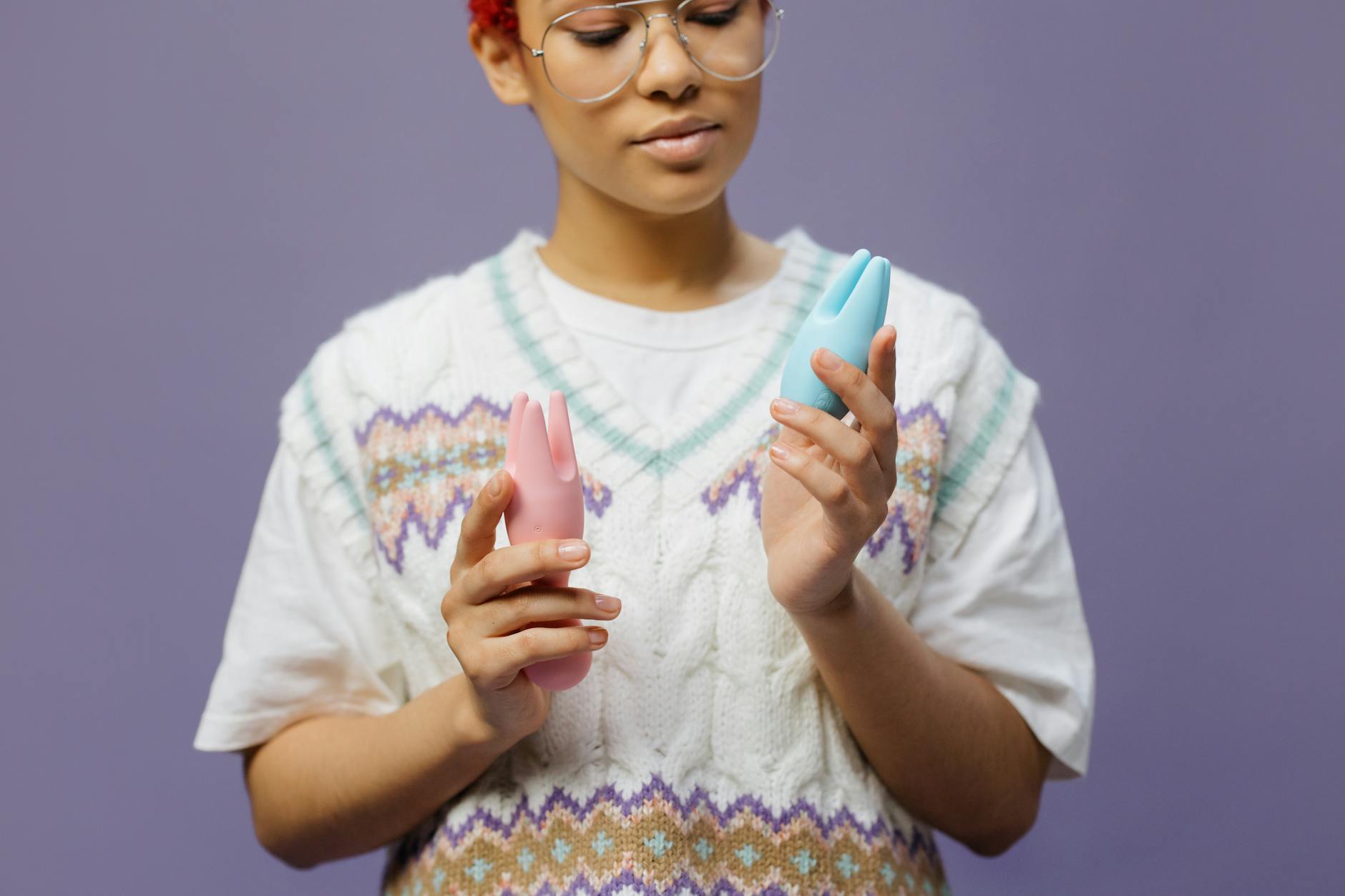
How Lemon Vibrators Help When You Feel Disconnected During Solo Play
When self-pleasure stops feeling like self-care and starts feeling like going through the motions. Here's why presence matters, and how the right tool brings you back.
Solo play used to feel good. Now it feels like you're checking a box. Your hand moves, your brain scrolls through what's supposed to work, and by the time something builds, you're already wondering if you should just stop and make coffee instead. This isn't laziness. It's disconnection.
Disconnection during solo play happens when the mental part of pleasure and the physical part stop talking to each other. You want to want it. Your body isn't convinced. And the gap between those two feelings is where a lot of people get stuck.
Solo sex isn't practice for partnered sex. It's not foreplay. It's its own thing, and it's important for reasons that have nothing to do with your partner or anyone else. When you have regular, satisfying solo time, you know your own map. You understand what you actually like, separate from what you think you should like. You know your rhythms. And you know that you matter enough to prioritize your own pleasure.
When that disconnects, something bigger disconnects too. You lose the thread of self-care. You stop trusting your own body. And that absence of trust carries into everything else.
Most people think the fix is either "try something new" (which sometimes helps, but sometimes just adds pressure) or "you're overthinking it" (which is not wrong but also not useful). The actual fix is usually simpler: you need to build presence back in.
First, routine flattens sensation. You've done this a hundred times. Your brain learns the path and stops paying attention. It's like driving a familiar route and arriving with no memory of the drive. Your hand knows what to do, so your mind checks out.
Second, external pressure sneaks in. You feel like you should be able to come. You feel like it should be faster. You feel like something's wrong with you if it takes longer than it used to. That pressure is a full-body clench that stops pleasure in its tracks.
Third, you lose the sensory anchor. Without novelty or variation, your nervous system doesn't activate. It's not that you're broken. It's that your system has adapted to the same input the same way every time.
Presence isn't meditation. It's not clearing your mind and emptying yourself into a void. It's the opposite. It's noticing what's actually happening in your body right now, in this moment, without judgment.
When you're present during solo play, you're not thinking about whether you're doing it right. You're paying attention to where sensation is strongest. You're noticing when your breath shifts. You're aware of what feels good at this specific moment on this specific day, because that changes. Your body is not a machine with one setting.
Clitoral vibrators, especially ones like the lemon vibrators that work through suction and pulsation rather than just direct vibration, help rebuild presence because they're more interesting to your nervous system. They create variation. They give your body multiple types of sensation to tune into. And that variety naturally pulls your attention back into what's happening instead of what should be happening.
Most traditional vibrators use straight vibration. It's effective, but it's also one-note. Your brain adapts to it quickly, and then you need to keep ramping up intensity to feel anything.
Lemon clitoral vibrators use a combination of suction and rhythmic pulsing. This mimics a pattern that's closer to how bodies naturally respond. It's not the same input over and over. It's dynamic. Your nervous system stays interested because the sensation is actually changing.
That difference matters for presence specifically because interest requires attention. When you're using something that creates real variation, your brain doesn't have permission to drift. You have to stay with what's happening.
The lem vibrator, for instance, has multiple settings that aren't just intensity increases. They're different patterns, different rhythms. Using it means you're actually making choices during sex instead of just following a script. Choice requires presence.
Start by setting a boundary with time. Tell yourself you have twenty minutes, and you're not looking for a specific outcome. You're looking for sensation. If you come, great. If you don't, that's information, not failure.
Then, start your lemon vibrator on a lower setting. Not because high intensity is bad, but because lower settings force you to pay more attention to subtle shifts. Your body will tell you when it's ready for more.
When you notice your mind drifting to whether you're doing it right, notice it without judgment, and come back to the actual feeling. Your thigh. Your breathing. The exact spot where sensation is strongest right now. That noticing is the whole practice.
Many people find that combining a lemon clitoral vibrator with light touch from their other hand creates a more complex sensory landscape. Your brain has two different inputs to process, which makes checking out almost impossible.
Disconnection during solo play sometimes signals something deeper. If you're stressed, grieving, or in relationship conflict, your body keeps score. Solo time might feel like you're avoiding something instead of honoring yourself. That's real, and a vibrator won't fix it alone.
But here's the thing: sometimes the way back to yourself is through your body, not around it. Solo play can be medicine. It can be the place where you remember that you still exist separately from your stress. That your pleasure is still available. That you haven't lost yourself.
When you approach solo time with presence and the right tool, it stops being a chore and becomes a real form of self-care. It becomes something you actually want to do.
If you've built presence back in, you've tried different settings, and solo play still feels empty, it might be worth checking in on bigger things. Are you depressed? Is your relationship in a rough patch? Are you dealing with untreated pain or trauma? Those things are real, and they need real attention, sometimes from a therapist.
But most of the time, when solo play feels disconnected, it's not because something's broken. It's because you stopped paying attention. A good lemon vibrator, used with actual presence, can be the thing that brings you back.
Physical disconnection usually shows up as numbness or delayed response. Emotional disconnection feels more like going through the motions or not caring whether you finish. In reality, they're usually tangled together. The physical and emotional are one system. A clitoral vibrator helps because it addresses both at once. It creates novelty (emotional reset) and delivers specific stimulation (physical response). Start with one, and you'll probably feel the other shift.
Not usually, and here's why. Most people think vibrators create a dependency because they feel more intense. But what they actually do is teach your body what certain kinds of stimulation feel like. You're gathering information, not losing it. The more you know about what works for your body, the better you can guide yourself or a partner. A lemon clitoral vibrator gives you feedback about what actually feels good, which makes solo play without one more intentional and present too.
Completely normal. Your body is not static. What felt amazing two minutes ago might feel too intense now. Your nervous system adapts. The fact that you're noticing these shifts and responding to them is presence. That's the whole goal. A lem vibrator with multiple patterns lets you follow what your body actually needs in real time instead of forcing yourself into one approach.
Some people feel it in the first session. Others take a few weeks of consistent, present practice before solo play stops feeling obligatory and starts feeling nourishing. Think of it like meditation. The first time you sit down, your mind is everywhere. But you keep showing up. Your brain learns. By the fifth or sixth time, something shifts. Same with this.
It can. When solo pleasure feels disconnected, partnered pleasure often does too. You're living in your body less. You're trusting your own signals less. That shows up in how you advocate for yourself, how you communicate about what you want, how much you actually desire intimacy. Rebuilding solo presence isn't selfish. It's foundational to showing up fully in any intimate situation.
That guilt is worth looking at. Solo pleasure isn't cheating. It's not a waste of time. It's not selfish. It's you knowing yourself. It's you maintaining your own interior life. A lot of that guilt is cultural, not real. But it's also worth asking if the guilt is coming from somewhere else. A partner who's uncomfortable with your solo time? Messaging from your family about what's appropriate? Religious background? Those are real things, and they might need real conversation or work. But the disconnection from solo play isn't the problem. The pressure around it is.
Disconnection during solo play is fixable. It doesn't mean something's wrong with you. It means you stopped paying attention, which makes sense because life is loud and demanding. You got distracted. Your nervous system adapted. Your brain checked out.
A lemon clitoral vibrator, used with actual presence and without performance pressure, can rebuild that connection quickly. Because the tool itself makes presence easier. It's more interesting. It requires more attention. And when you're actually paying attention to your body during pleasure, something shifts.
That shift is subtle but real. You start to trust yourself again. You remember that your pleasure matters. You realize you're still there, still wanting, still alive in your own skin.